Liquid vs Air Cooling in Battery Storage: Which Suits Your Site?
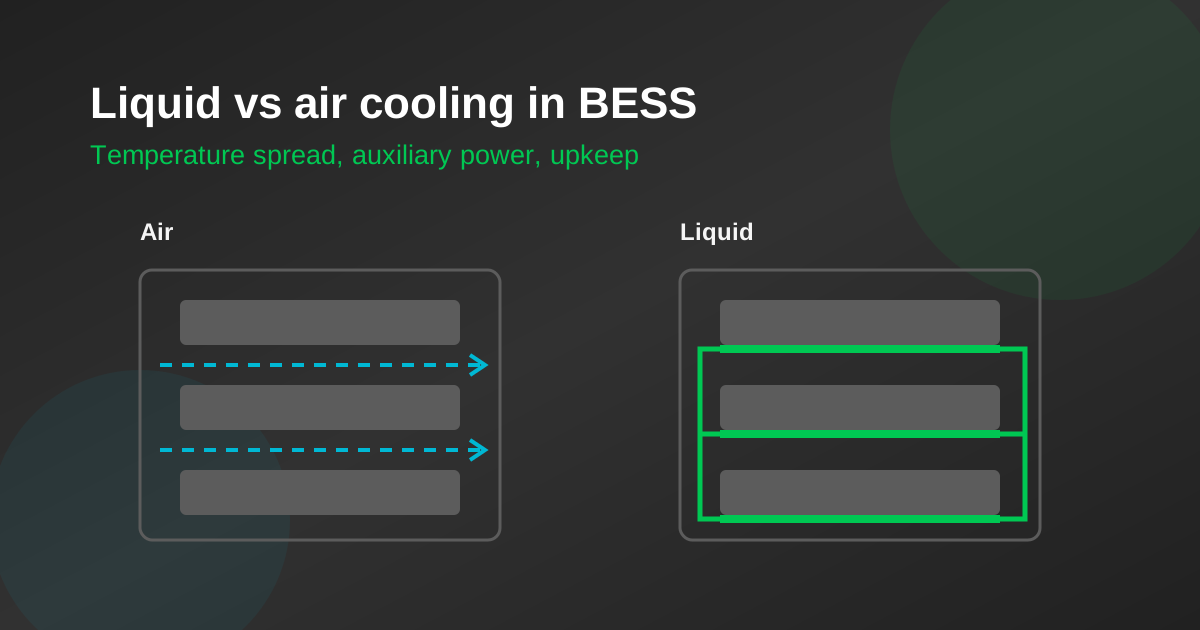
Cooling decides how evenly a battery ages, how much power it uses on itself, and how it copes with Indian heat and dust. How air and liquid cooling compare, and when each makes sense.
9 articles on explainer.
Cooling decides how evenly a battery ages, how much power it uses on itself, and how it copes with Indian heat and dust. How air and liquid cooling compare, and when each makes sense.
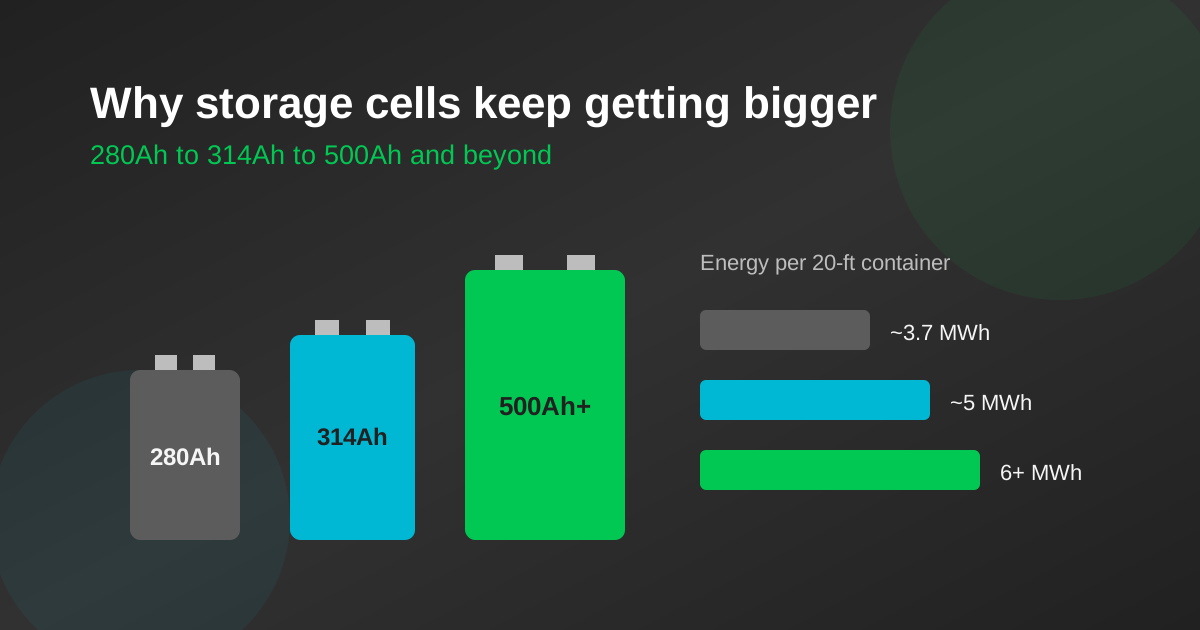
LFP storage cells have grown from 280Ah to 314Ah to 500Ah and beyond. Why bigger cells make cheaper, denser systems, what they give up, and what to ask when quotes use different cells.
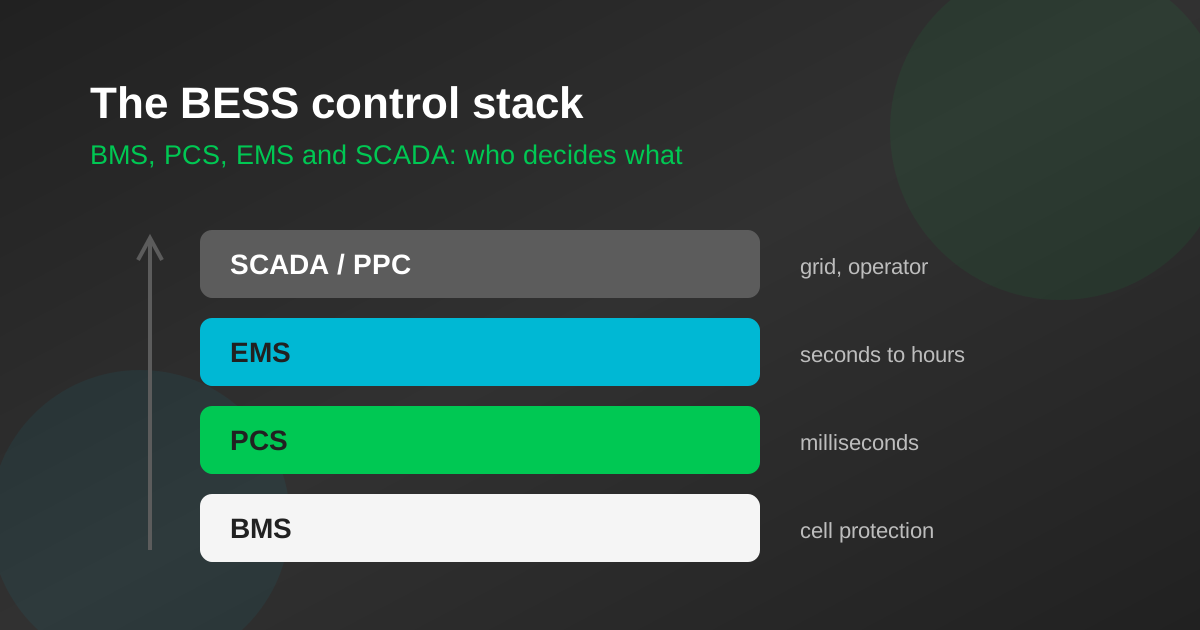
Four control layers run a battery storage system, each on its own timescale. The BMS protects the cells, the PCS moves the power, and the EMS decides what the system earns.
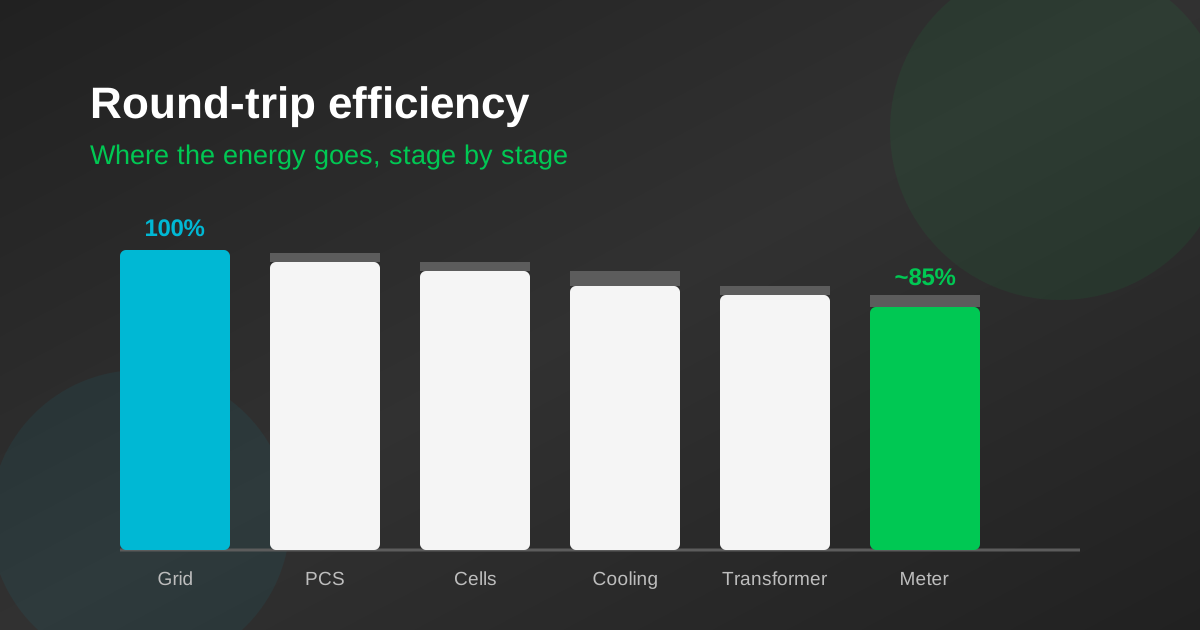
A battery quoted at 95 per cent efficient often returns about 85 per cent at the meter. The losses sit in the cells, the inverter, the transformer and the cooling, and they change the arbitrage maths.
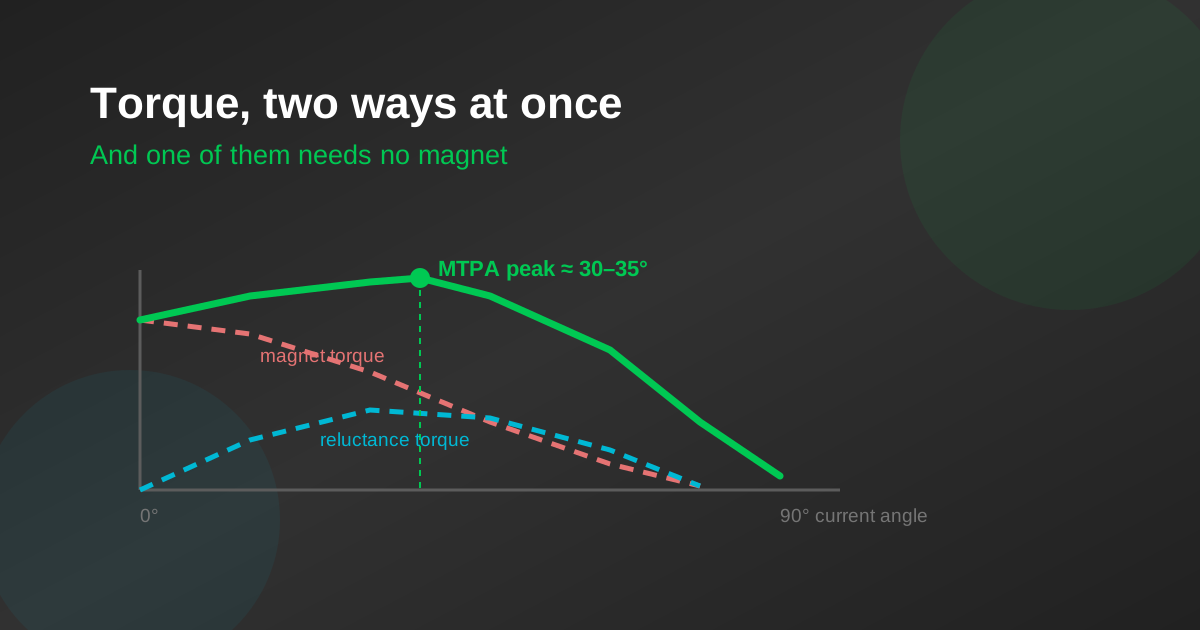
A third to a half of a modern traction motor’s torque comes from rotor geometry rather than from the magnets. Understanding where it comes from explains most of what a motor spec sheet is telling you — and why the controller is part of the motor.
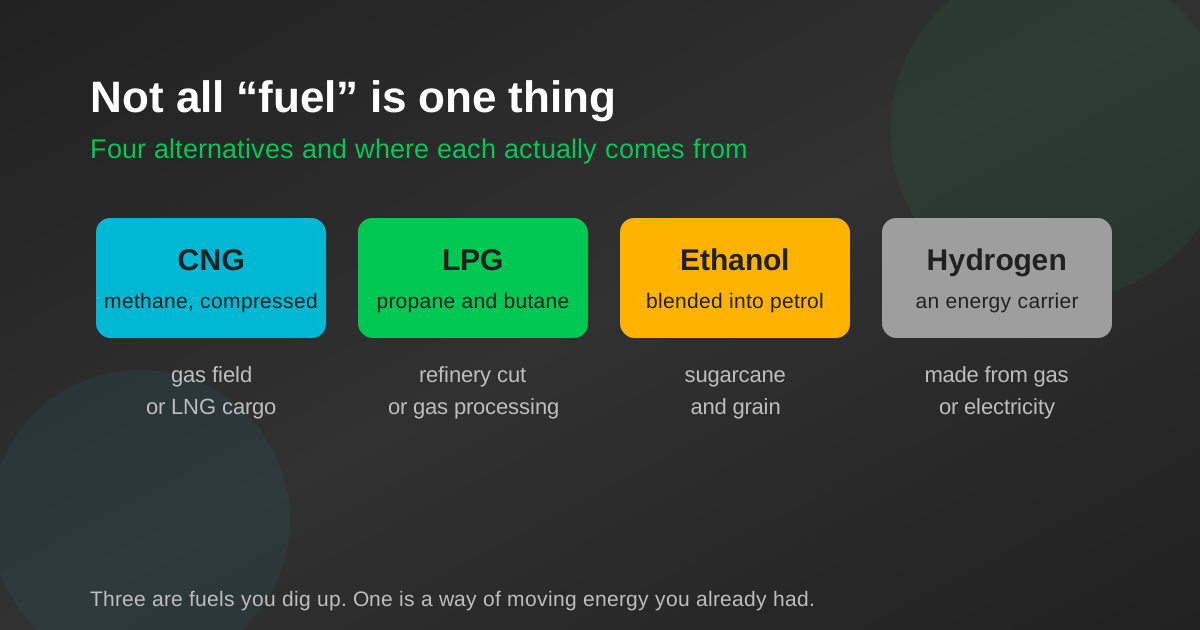
Three of these are fuels you dig up. One is a way of moving energy you already had. That distinction decides most of the argument — and it is the one usually left out of it.
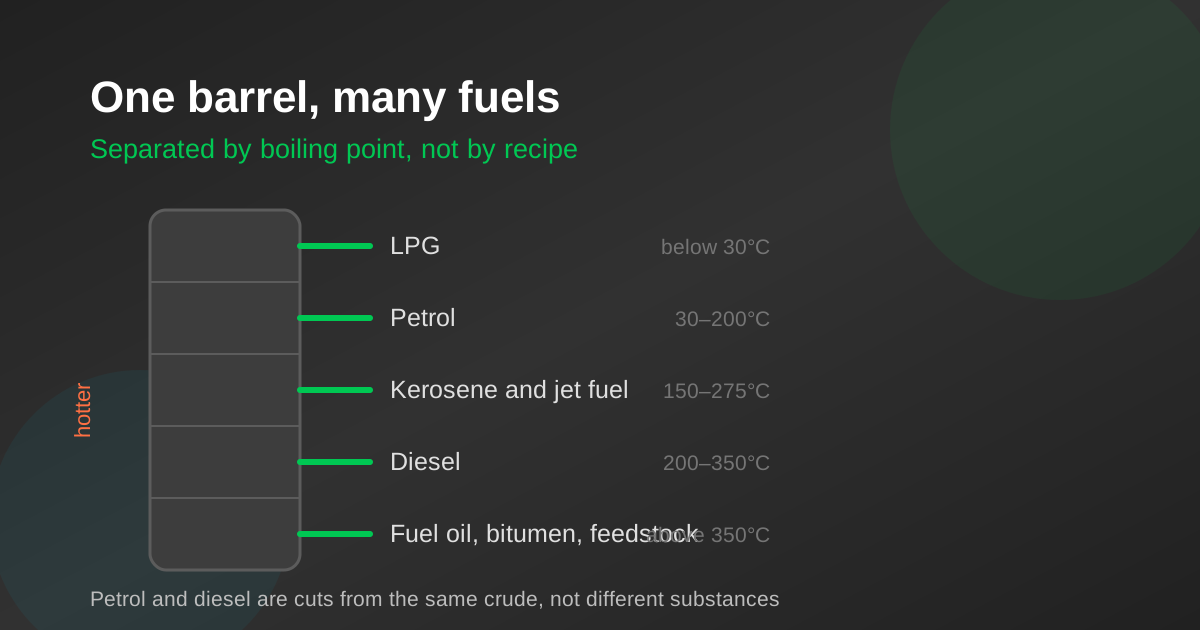
They are not two different substances. They are two cuts of the same crude, separated by boiling point, and understanding that explains octane, cetane, BS-VI, why diesel does more work per litre — and where all the rest of the energy goes.
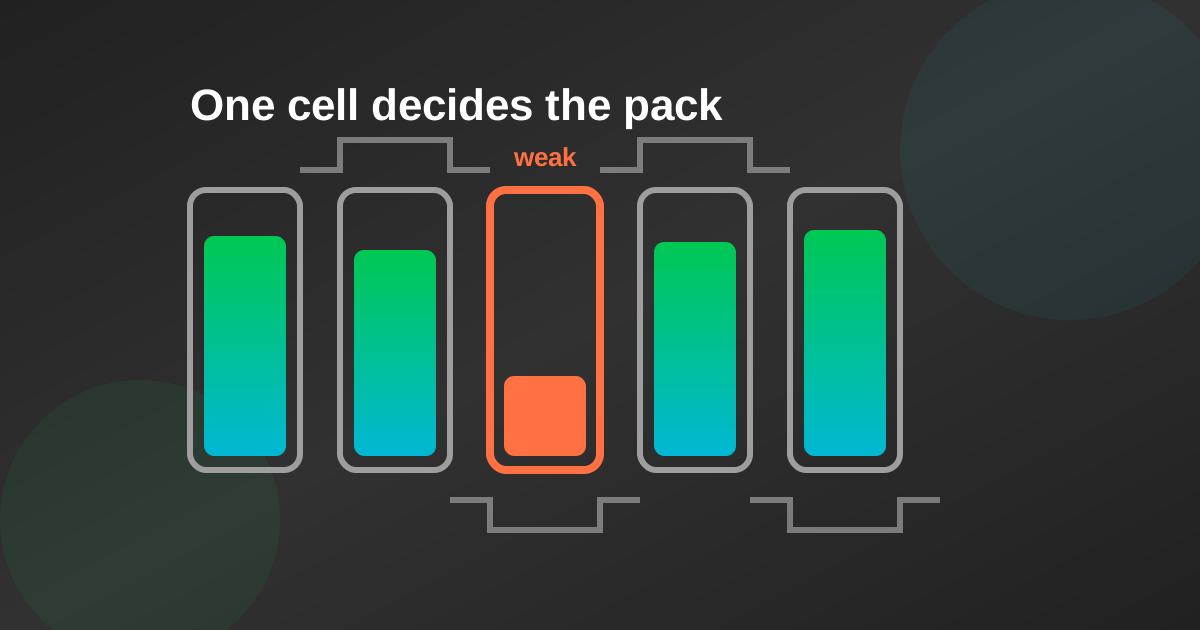
A battery pack is a chain of cells in series, and a chain is only as strong as its weakest link. Understanding balancing explains most of the odd behaviour drivers report.
Ah, V, kWh, C-rate, DoD, IP67, BMS. A plain-language guide to the numbers on an Indian battery spec sheet — and which of them actually predict how the pack will behave.