How to Read a Lithium Battery Spec Sheet Before You Buy
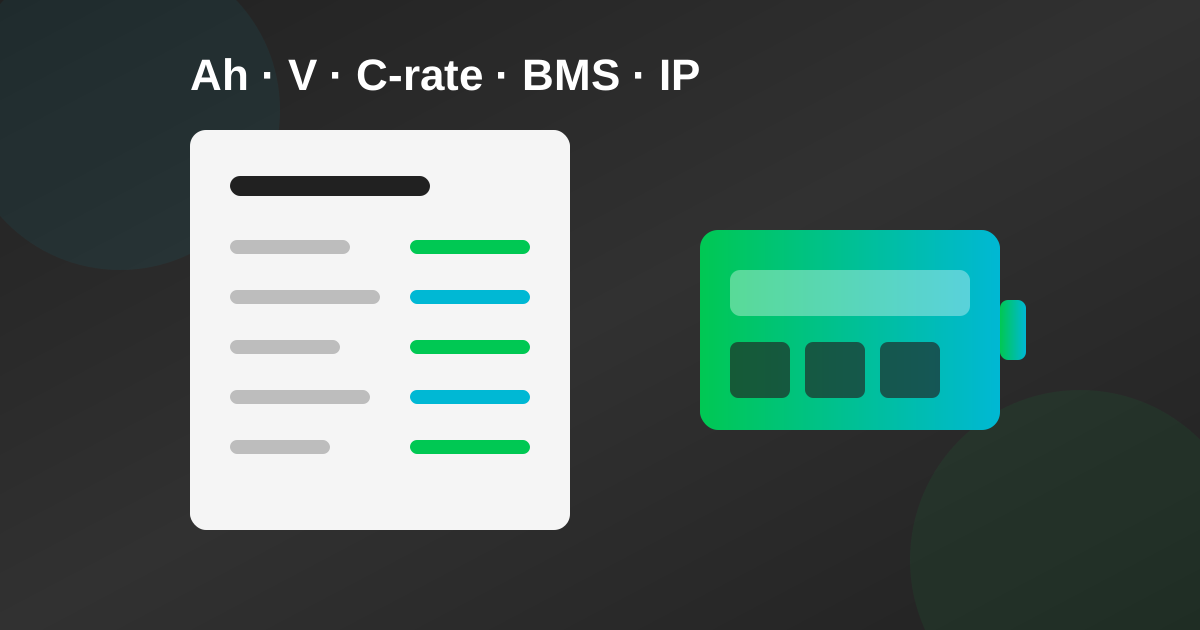
Ah, V, kWh, C-rate, DoD, IP67, BMS. A plain-language guide to the numbers on an Indian battery spec sheet — and which of them actually predict how the pack will behave.
Published: 28 July 2026
Explainer · 8 min read
Why the spec sheet matters more here than anywhere else
India’s battery market has a wide quality spread. Two packs can carry the same headline “60V 100Ah” label, cost very different amounts, and behave nothing alike after eight months of daily commercial use. The spec sheet is where that difference is visible — if you know which lines to read.
Voltage, amp-hours and the number that actually matters
Voltage (V) has to match your vehicle’s controller and motor. This is not a preference, it is a compatibility requirement.
Amp-hours (Ah) measure charge capacity, but they are only comparable between packs of the same voltage. A 48V 100Ah pack and a 60V 100Ah pack do not hold the same energy.
Watt-hours or kilowatt-hours (Wh / kWh) is the number to compare across packs, because it already combines the other two: volts × amp-hours = watt-hours. If a seller quotes only Ah and will not tell you Wh, do the multiplication yourself.
Chemistry: LFP and NMC are different tools
Most packs you will be offered are one of two lithium chemistries. LFP (lithium iron phosphate) is generally the more thermally stable choice with longer cycle life, at the cost of being heavier and bulkier for the same energy. NMC (nickel manganese cobalt) packs more energy into less weight and space, which matters when space is tight.
For hard commercial duty in Indian ambient temperatures, thermal stability and cycle life usually earn their keep. For weight-sensitive two-wheeler applications the trade-off is genuinely closer. Neither is universally “better” — but a seller who will not tell you which chemistry they are selling is a warning sign on its own.
C-rate: how fast the pack can work
C-rate describes charge and discharge speed relative to capacity. 1C means the pack can deliver its full capacity in an hour; 0.5C means it takes two.
Two figures matter to you. The continuous discharge rate must cover what your vehicle draws when climbing a loaded flyover, not just cruising. The charge rate determines how long the vehicle sits idle. Fast charging is convenient and, sustained over years, is harder on the cells — a real trade-off, not marketing.
Cycle life and depth of discharge, read together
A cycle-life figure quoted without its conditions is close to meaningless. Look for the depth of discharge (DoD) and the temperature it assumes, and for the end-of-life definition — usually the point at which the pack retains 80% of original capacity.
The BMS is half the product
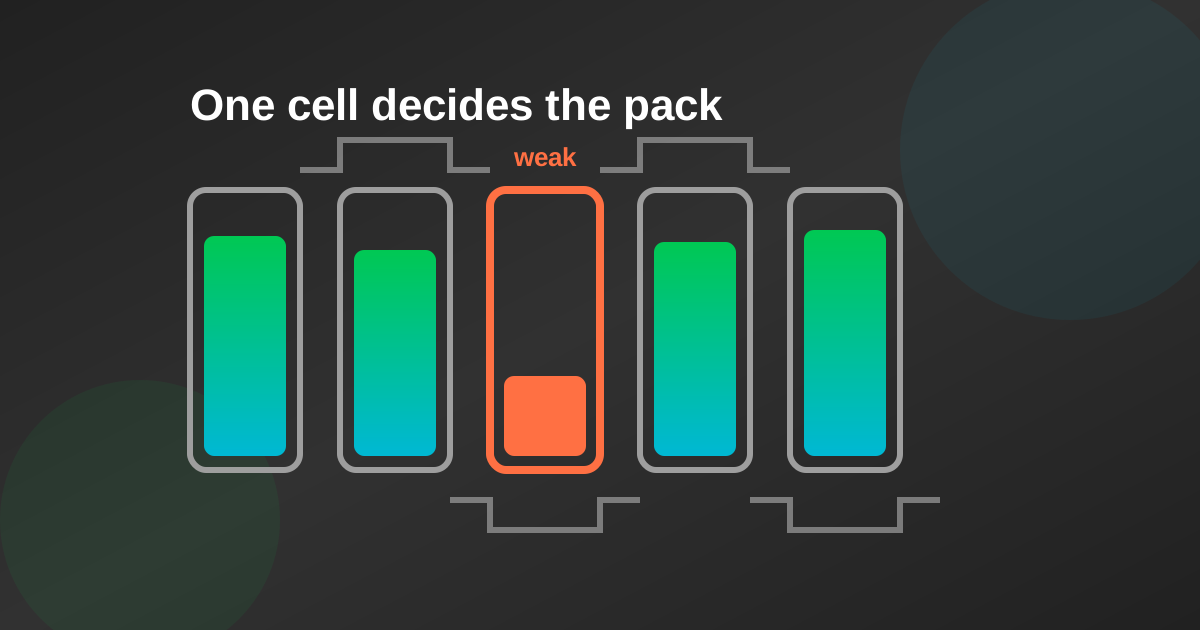
The Battery Management System is the electronics that keeps cells balanced and stops the pack doing dangerous things. It is not an accessory. A weak BMS on good cells produces a bad battery.
Ask what it protects against. A serious BMS handles at minimum:
- •Over-charge and over-discharge cut-off
- •Over-current and short-circuit protection
- •High and low temperature cut-off, on both charge and discharge
- •Cell balancing across the pack
- •State-of-charge reporting you can actually see
IP rating: monsoon is a specification
The IP number describes sealing against dust and water. The first digit is dust, the second is water. IP65, IP67 and similar ratings tell you how the pack will handle a waterlogged Mumbai underpass or a monsoon week of standing water.
For any vehicle that works outdoors year-round in India, treat this as a required field on the spec sheet, not an optional one.
Certifications and warranty
Ask which standards the pack is tested to, and ask to see the test report rather than a logo on a brochure. For traction batteries in electric vehicles, safety testing requirements are set out in Indian standards, and a legitimate manufacturer will have documentation.
On warranty, the exclusions matter more than the headline duration. Read what voids it: use of a non-approved charger, water ingress beyond the IP rating, opening the pack, and physical damage are common and reasonable. A warranty that also excludes ordinary commercial use is not a warranty.
A short checklist to carry to the shop
- •Chemistry (LFP or NMC) stated in writing
- •Wh or kWh, not just Ah
- •Continuous discharge rate, and charge rate
- •Cycle life with DoD, temperature and end-of-life definition
- •BMS protections listed individually
- •IP rating
- •Warranty duration and full exclusions list
- •Local service point and turnaround time
Thinking about upgrading?
Talk to our team about the right pack for your vehicle, and about EMI options that keep the monthly outgo close to what you already spend.
Get in touch