Beyond Lithium: Long-Duration Energy Storage Options Explained
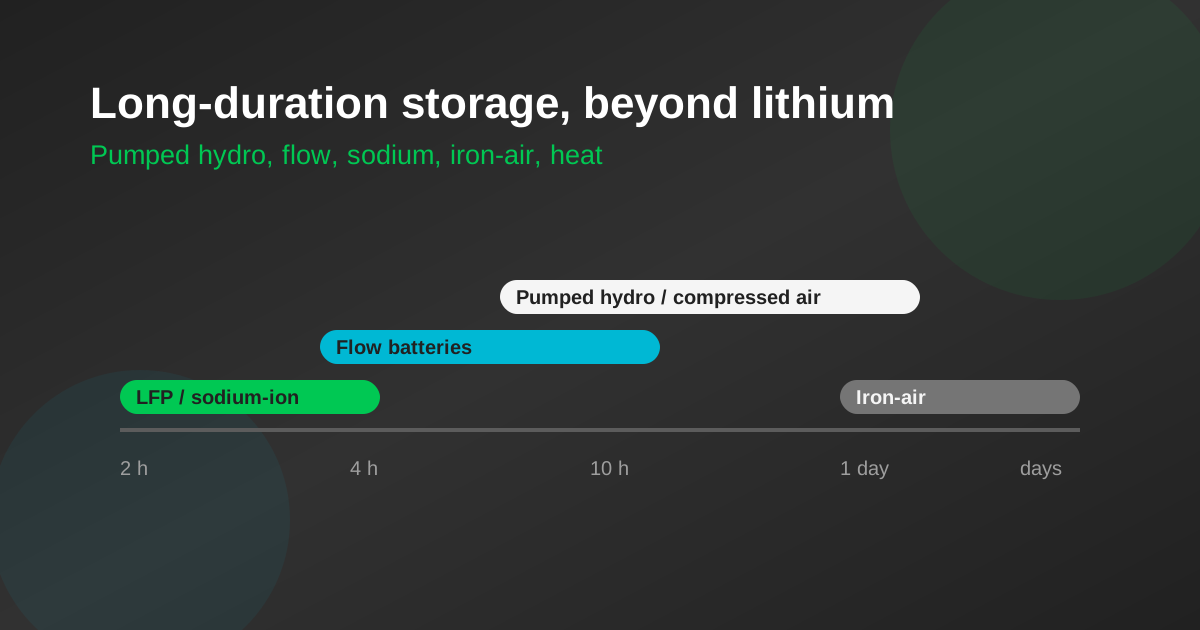
Pumped hydro, flow batteries, sodium-ion, iron-air, compressed air and thermal storage compared on duration, efficiency and maturity, and where each fits against two-to-four-hour LFP.
8 articles on grid storage.
Pumped hydro, flow batteries, sodium-ion, iron-air, compressed air and thermal storage compared on duration, efficiency and maturity, and where each fits against two-to-four-hour LFP.
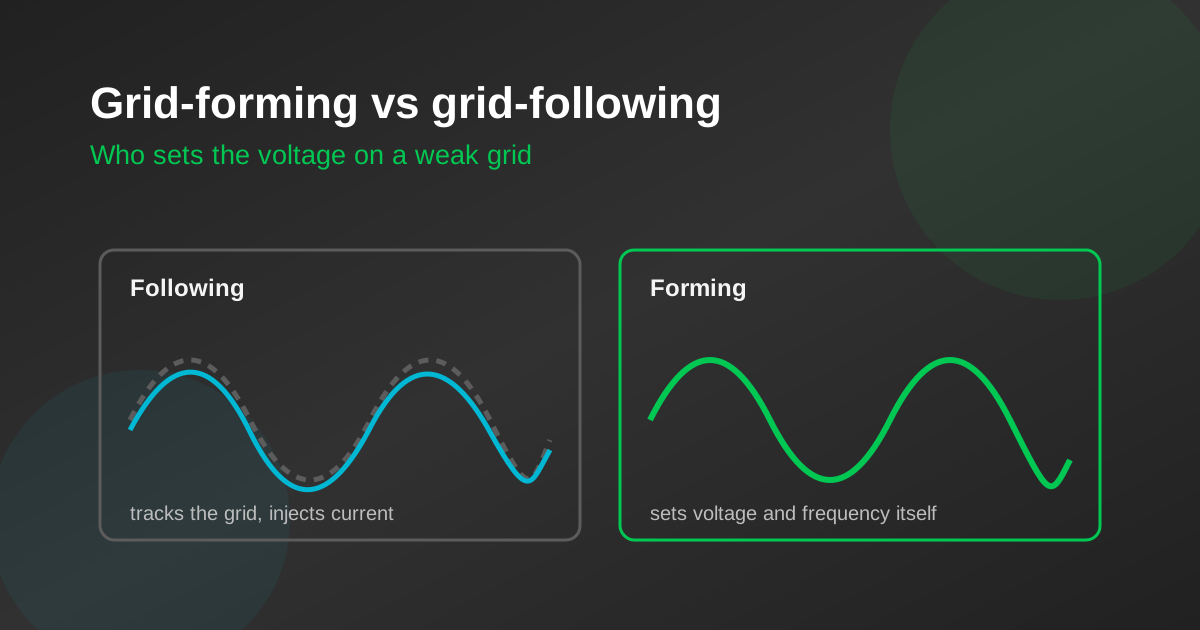
Most inverters follow the grid. Grid-forming inverters set its voltage and frequency themselves, which is why batteries are becoming the stabilising anchor of renewable-heavy networks.
Construction is the short part. The contract structure, the equipment lead times, the test programme that has to pass before anyone accepts the plant — and the places a storage project usually slips.
The containers are what you see and not what most of the money went on. A tour of the conversion, transformation, cooling, control and safety equipment that decides whether a storage plant works.
A 100 MW / 200 MWh plant and a 50 MW / 200 MWh plant hold the same electricity and do different jobs. How duration is chosen, what the nameplate does not give you, and why cells fading is a design decision rather than a maintenance one.
The batteries are a purchase order. Finding somewhere the plant is allowed to exist, can be connected and can be reached is the hard part — and doing it in the wrong order costs a year.
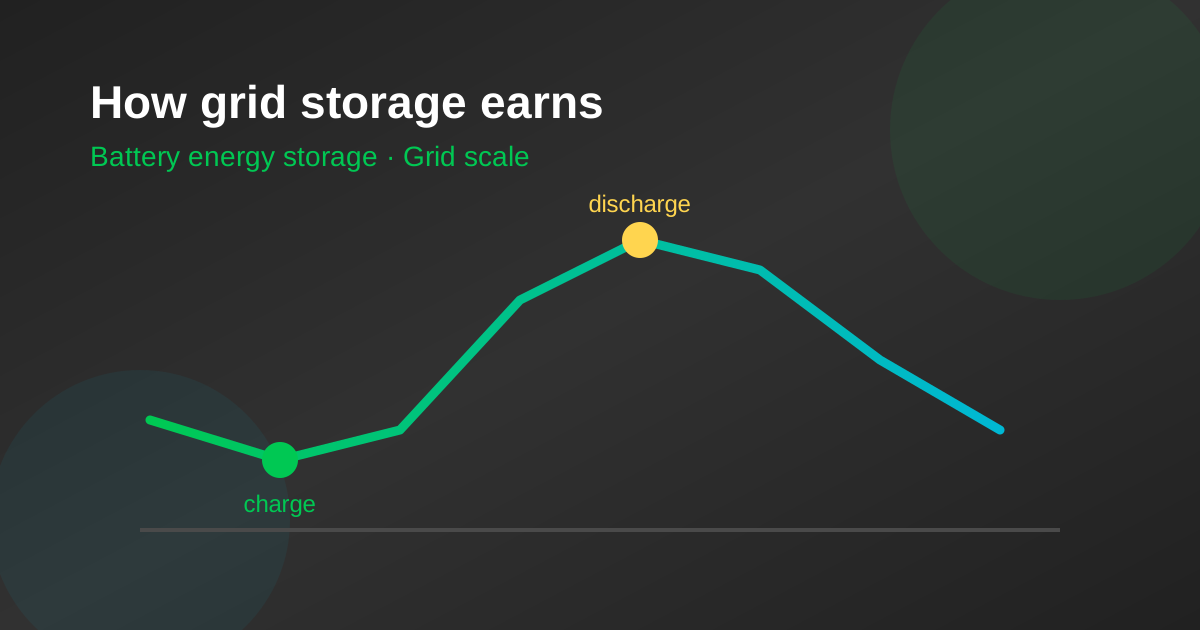
A grid battery earns from several revenue streams at once, and few projects are viable on any single one. How value stacking works, and what makes a project bankable.
India is adding solar and wind far faster than it is adding the flexibility to absorb them. Grid-scale storage is the technology being asked to close that gap — here is how it works.