What Petrol and Diesel Actually Are
They are not two different substances. They are two cuts of the same crude, separated by boiling point, and understanding that explains octane, cetane, BS-VI, why diesel does more work per litre — and where all the rest of the energy goes.
Published: 26 August 2026
Explainer · 11 min read
They are not two different substances
Most people carry a mental model in which petrol and diesel are two separate products, made in two separate ways, for two separate kinds of engine. That is not what they are.
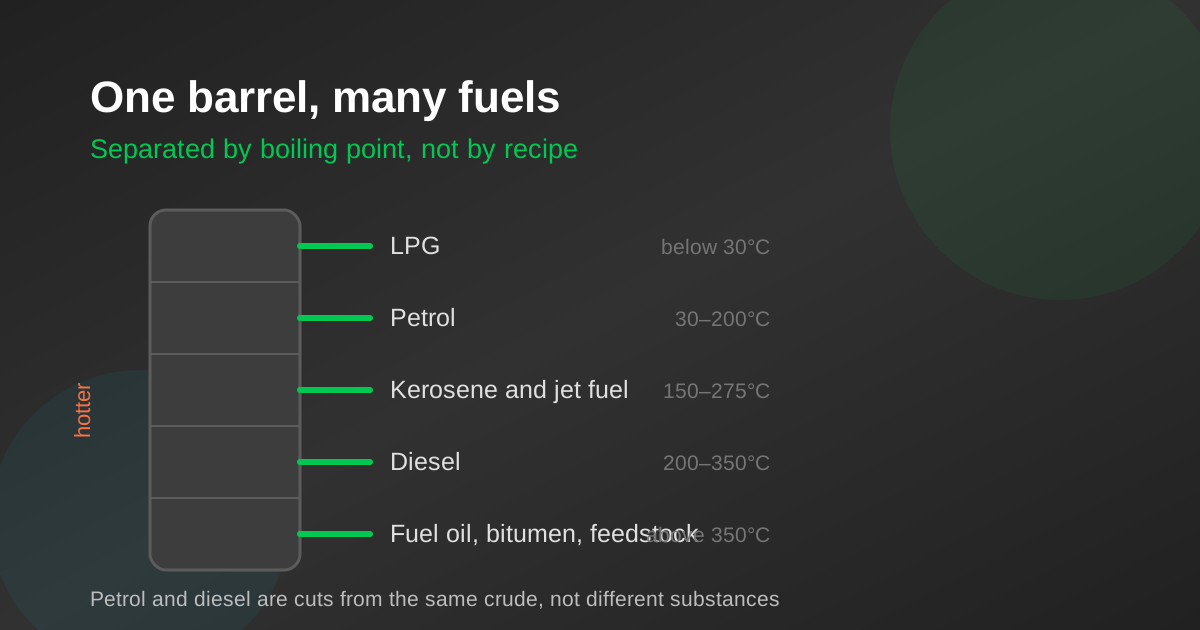
Both are cuts from the same crude oil, separated in the same column, in the same refinery, on the same day. What distinguishes them is boiling point. Petrol is the fraction that comes off between roughly 30 and 200°C; diesel is the heavier fraction that comes off between roughly 200 and 350°C. Kerosene and jet fuel sit between them. LPG comes off the top, and what will not boil at all becomes fuel oil and bitumen.
Crude oil is a mixture of thousands of hydrocarbons — chains of carbon and hydrogen of varying length. Short chains are light, volatile and boil easily. Long chains are heavy, oily and boil high. Heat the mixture in a tall column and the different lengths condense at different heights. That is essentially all a refinery’s primary unit does: it sorts molecules by size.
A refinery does not make petrol and diesel. It separates them out of something that already contained both, and then adjusts the proportions with further processing. That single fact explains most of the odd behaviour of fuel markets.
Petrol: made to burn on command
A petrol engine compresses a mixture of fuel and air, then ignites it with a spark at a chosen instant. The whole design depends on the fuel not igniting before the spark arrives. Premature ignition under compression is called knocking, and sustained knocking destroys engines.
So the useful property of petrol is resistance to spontaneous ignition, and that is what the octane number measures. In India you will see 91 octane as regular and 95 or higher as premium. The number is a resistance rating, not a quality or energy rating.
This is the most common misunderstanding about fuel in the country, so it is worth stating plainly: putting higher-octane petrol into an engine that was not designed for it does not give you more power or better mileage. It gives you more knock resistance that the engine does not need. If the manufacturer specifies 91, then 91 is the correct fuel and the premium grade is a donation.
Diesel: made to ignite by itself
A diesel engine has no spark plug. It compresses air alone, hard enough that the air becomes hot enough to ignite fuel, then sprays the fuel in. Here the useful property is exactly the opposite of petrol’s: the fuel must ignite readily and promptly on contact with hot air.
That readiness is measured by the cetane number, and Indian diesel typically specifies a minimum around 51. Higher cetane means a shorter delay between injection and ignition, which means smoother combustion, easier cold starting and less of the characteristic diesel clatter.
Octane and cetane are therefore opposite scales measuring opposite virtues. A fuel that is good at one is by construction bad at the other, which is why putting petrol in a diesel engine or diesel in a petrol engine is not a minor error.
Why diesel does more work per litre
Diesel is denser than petrol — longer molecules, more tightly packed — so a litre of it contains roughly 10 to 15 per cent more chemical energy. On top of that, the diesel cycle runs at higher compression, and higher compression converts more of that energy into motion rather than heat.
A diesel engine therefore typically converts something in the region of 40 to 45 per cent of the fuel’s energy into useful work, against roughly 30 to 35 per cent for petrol. Both numbers are worth sitting with for a moment. Even the better of the two throws away well over half of what you paid for, as heat, before the vehicle has moved.
That is not a fault in any particular engine. It is a limit of heat engines in general, and it is the single biggest structural difference between burning fuel and using electricity. An electric drivetrain typically delivers 85 to 90 per cent of the energy in the battery to the wheels, because it never has to turn heat into motion in the first place.
What BS-VI changed
India moved from Bharat Stage IV to Bharat Stage VI nationwide in April 2020, skipping BS-V entirely. The most consequential change was to sulphur: from 50 parts per million down to 10 ppm in both petrol and diesel.
Sulphur matters because it poisons catalysts. Without ultra-low-sulphur fuel, the exhaust after-treatment that modern engines depend on — particulate filters, selective catalytic reduction, lean NOx traps — degrades quickly. So the fuel specification had to change before the vehicle specification could.
Two practical consequences follow. Refineries spent very large sums on hydrotreating capacity to strip that sulphur out, and that cost sits in the base price of every litre sold today. And a BS-VI vehicle run on non-compliant fuel will damage its after-treatment, which is one reason adulterated fuel is a more expensive problem now than it was fifteen years ago.
What else is in the tank
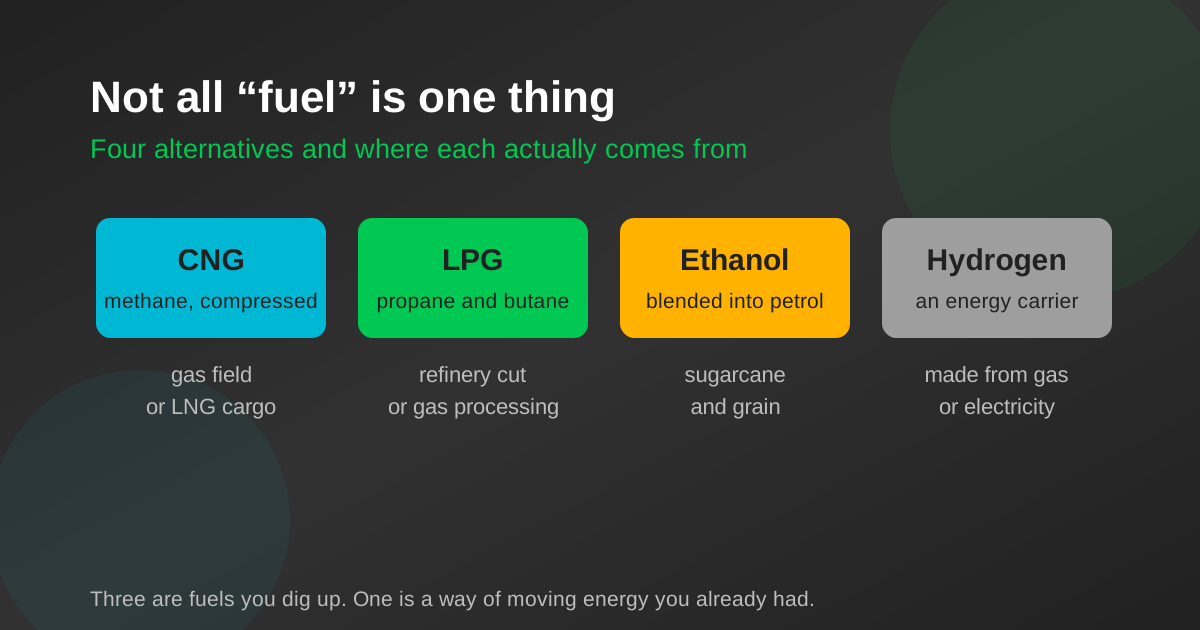
- •Ethanol. Petrol sold in India is no longer pure petrol. The country reached about 20 per cent average ethanol blending in 2025, five years ahead of the original target. Ethanol carries roughly a third less energy per litre than petrol, which has a small but real effect on mileage.
- •Biodiesel. Blending into diesel exists but remains at low single-digit percentages, well behind the ethanol programme.
- •Additive packages. Detergents, corrosion inhibitors, anti-oxidants and lubricity improvers. This is the main real difference behind branded “power” fuels, and the effect is on cleanliness over time rather than on performance today.
- •Seasonal and regional variation. Volatility is adjusted so that petrol vaporises properly in cold weather without vapour-locking in heat, and diesel is treated so it does not gel in a Himalayan winter. The same grade is not the same blend in every month or every state.
The part that matters if you are comparing with electric
The honest comparison is not litres against units. It is energy delivered to the wheel per rupee spent, and once you set it out that way the picture is stark.
A litre of diesel holds around 10 kWh of chemical energy. At 40 per cent engine efficiency, roughly 4 kWh of that reaches the road. A battery holding 4 kWh, at 85 per cent drivetrain efficiency, delivers about 3.4 kWh to the road — comparable work, from a quarter of the nominal energy, because nothing had to be burned to get it there.
That is the structural advantage, and it is why the running-cost gap between a diesel three-wheeler and an electric one is so much larger than the difference in fuel prices would suggest. If you want to see the same arithmetic done in rupees for a specific vehicle, our calculator lets you put your own numbers in, and the diesel generator comparison works through the stationary version of the same question.
None of which makes petrol and diesel bad products. They are extraordinary ones: energy dense, stable at room temperature, transportable in an ordinary steel drum, and refuellable in ninety seconds. Understanding what they actually are is the only way to have an honest conversation about what replaces them and where.
Frequently asked questions
What is the actual difference between petrol and diesel?+
Boiling point, and therefore molecule size. Both are cuts of the same crude oil separated in the same refinery column. Petrol is the fraction that comes off at roughly 30 to 200°C; diesel is the heavier fraction that comes off at roughly 200 to 350°C. They are not manufactured separately — they are sorted out of a mixture that contained both.
Does higher octane petrol give better mileage or more power?+
Not in an engine that was not designed for it. Octane measures resistance to igniting before the spark arrives, which is what prevents knocking — it is not a measure of energy content or quality. If your manufacturer specifies 91 octane, then 91 is the correct fuel and paying for 95 buys knock resistance the engine has no use for.
What is cetane number and why is it the opposite of octane?+
A diesel engine has no spark plug: it compresses air until it is hot enough to ignite fuel sprayed into it. So diesel must ignite readily, and cetane measures how readily — Indian diesel typically specifies a minimum around 51. Octane measures resistance to spontaneous ignition and cetane measures eagerness for it, so a fuel good at one is by construction bad at the other.
Why does diesel give more kilometres per litre?+
Two reasons that compound. Diesel is denser, so a litre holds roughly 10 to 15 per cent more chemical energy. And the diesel cycle runs at higher compression, converting about 40 to 45 per cent of that energy into useful work against roughly 30 to 35 per cent for petrol. Both figures are worth noting: even the better one discards more than half of what you paid for as heat.
What did BS-VI change about Indian fuel?+
Mainly sulphur, cut from 50 parts per million to 10 ppm in both petrol and diesel when India moved to Bharat Stage VI nationwide in April 2020, skipping BS-V. Sulphur poisons the catalysts in particulate filters and selective catalytic reduction systems, so the fuel had to change before the vehicles could. The hydrotreating capacity refineries built to strip it out sits in the base price of every litre sold today.
Is Indian petrol pure petrol?+
No. India reached about 20 per cent average ethanol blending in 2025, five years ahead of the original target. Ethanol carries roughly a third less energy per litre than petrol, so E20 costs a few per cent of mileage — real, but frequently exaggerated. Diesel carries a much smaller biodiesel blend, still in low single digits.
Thinking about upgrading?
Talk to our team about the right pack for your vehicle, and about EMI options that keep the monthly outgo close to what you already spend.
Get in touch