Grid-Scale Battery Storage in India: What It Does and Why It Is Growing
India is adding solar and wind far faster than it is adding the flexibility to absorb them. Grid-scale storage is the technology being asked to close that gap — here is how it works.
Published: 14 August 2026
Grid storage · 8 min read
The problem storage is being asked to solve
India has added renewable capacity at remarkable speed. Solar, however, generates on a fixed schedule set by the sun, and it does not align with when people use electricity.
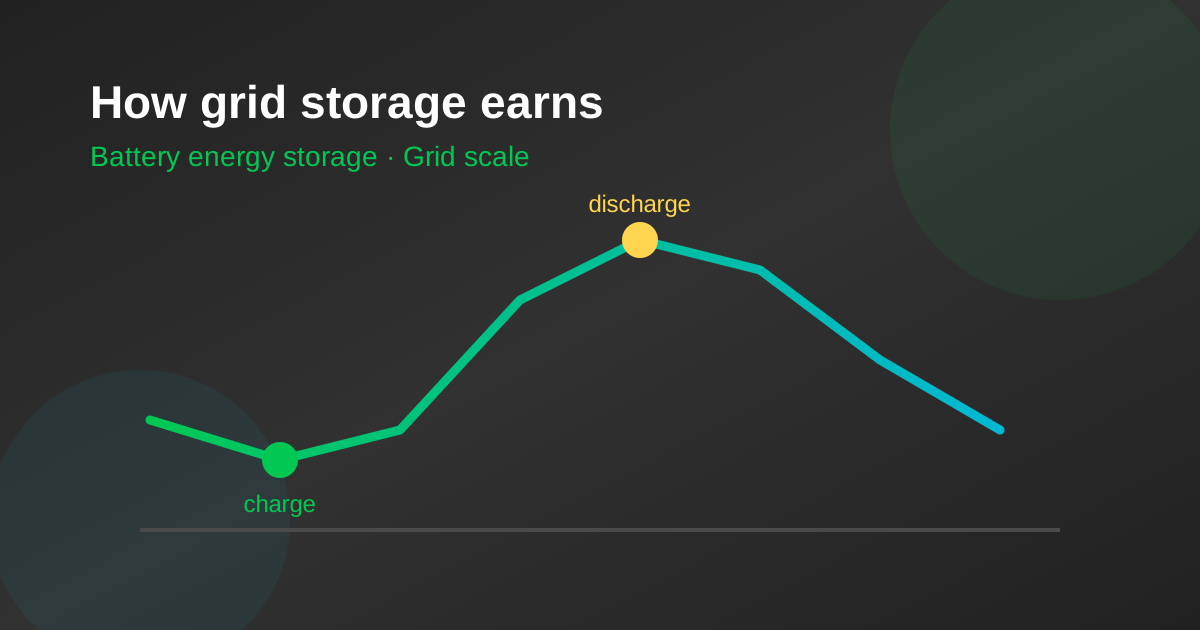
Generation peaks around midday. Demand peaks in the evening, after sunset, when air conditioning, lighting and cooking coincide. The larger the solar fleet grows, the wider that gap becomes — surplus in the middle of the day, scarcity a few hours later.
Storage is the most direct answer: absorb the surplus, release it into the evening peak.
What grid-scale storage actually does
- •Energy shifting. Charge during surplus, discharge during peak. This is the headline function and the reason most projects get built.
- •Renewable firming. Smoothing the output of a solar or wind plant so it can commit to a more predictable delivery profile.
- •Frequency response. Injecting or absorbing power within milliseconds to hold grid frequency stable — something thermal plant cannot do nearly as fast.
- •Deferring network investment. Relieving a congested line or substation so an expensive upgrade can be postponed.
- •Black start and reserve. Providing capacity that can be called on when other generation is unavailable.
Why lithium, and why LFP in particular
Stationary storage does not care much about weight or volume, which removes the main reason to choose energy-dense chemistries. What it cares about is cycle life, safety and cost per kWh over many years of daily cycling.
That combination is why LFP has become the dominant chemistry for grid-scale projects. Our chemistry comparison covers the trade-offs; for stationary applications, the ones that matter point clearly in one direction.
What a project physically involves
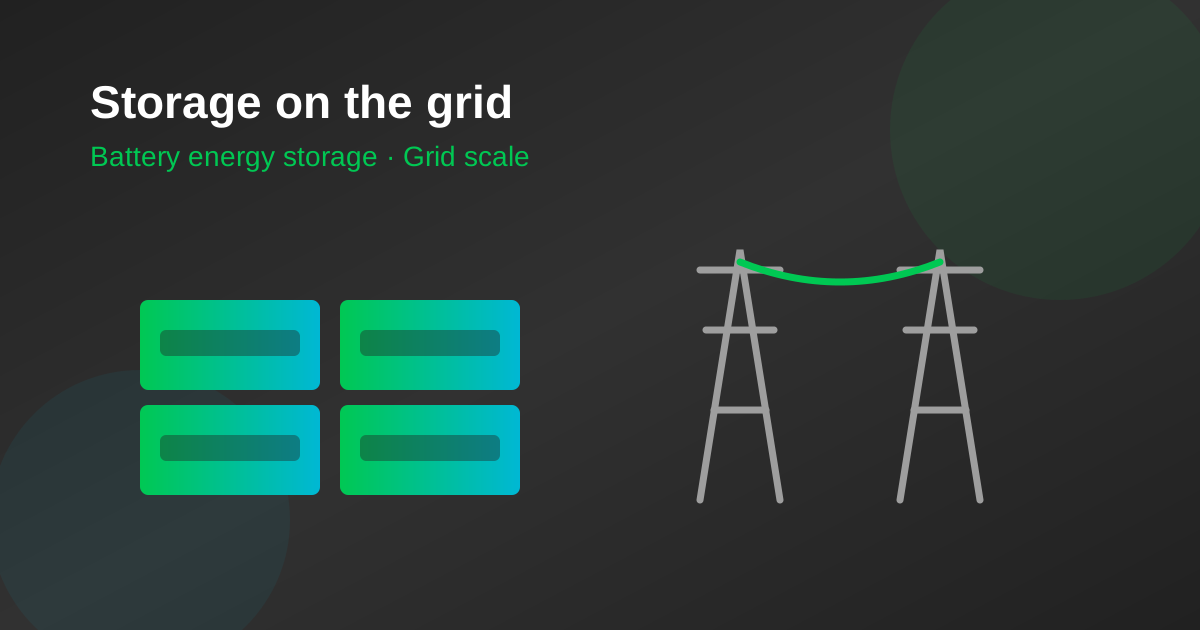
A grid-scale installation is not simply a large pile of batteries. It comprises battery containers, power conversion systems that convert between DC and AC, transformers and switchgear to connect at the right voltage, a control and energy management system, thermal management, and fire detection and suppression.
The battery cells are often a minority of the total project cost. Connection, land, civil works, protection systems and grid compliance make up a great deal of it.
The constraints that decide whether projects get built
- •Grid connection — securing a connection point with adequate capacity, and the time that takes
- •Revenue certainty — whether there is a contracted, bankable revenue stream rather than merchant exposure
- •Land and siting, including proximity to the network node the project is meant to support
- •Regulatory treatment — how storage is classified, charged and dispatched varies and continues to evolve
- •Safety approvals, fire protection design and local authority requirements
Because the regulatory and tariff framework for storage in India is still developing, check the current position with the relevant regulator rather than relying on any general description, including this one.
Where this is heading
The direction is not seriously disputed. A grid with a very large share of variable generation needs flexibility, and batteries are the fastest-responding and quickest-to-build source of it.
What remains genuinely uncertain is pace and structure: how storage is procured, how it is paid, and how quickly connection capacity becomes available. Those are policy questions more than technical ones.
Frequently asked questions
What is grid-scale battery storage?+
Large battery installations connected to the transmission or distribution network rather than to a single consumer. They absorb electricity when generation exceeds demand and release it when demand exceeds generation, providing flexibility that a grid with large amounts of solar and wind increasingly needs.
Why does India need grid-scale storage?+
Solar generates in the middle of the day while peak demand occurs in the evening. As solar capacity grows, that mismatch widens — surplus at noon, scarcity after sunset. Storage moves midday energy into the evening peak, and also provides fast response services that keep grid frequency stable.
How long can a grid-scale battery discharge for?+
Most systems built for shifting solar into the evening peak are designed for a few hours at full output. Systems built for frequency response may discharge for far shorter periods at high power. The duration is a design choice driven by what the system is being paid to do.
Thinking about upgrading?
Talk to our team about the right pack for your vehicle, and about EMI options that keep the monthly outgo close to what you already spend.
Get in touch