Solar Plus Storage for Indian Homes: How to Size a System That Pays Back
Most home solar-plus-battery systems are sized by guesswork or by whatever the vendor stocks. Here is the method, using your own electricity bill as the starting point.
Published: 14 August 2026
Home storage · 8 min read
Start with the bill, not the brochure
Almost every badly sized home system starts with a vendor asking “how many kilowatts do you want?” The right first question is what your electricity bill actually says.
Pull twelve months of bills and note the units consumed each month, and your tariff per unit including any slab effects. Everything else follows from those two numbers.
Step 1: size the solar array to your daytime use
Divide your monthly units by 30 to get daily consumption. Then estimate how much a kilowatt of panels generates per day where you live — this varies with location, orientation, shading and season, so ask your installer for a figure specific to your roof rather than a national average.
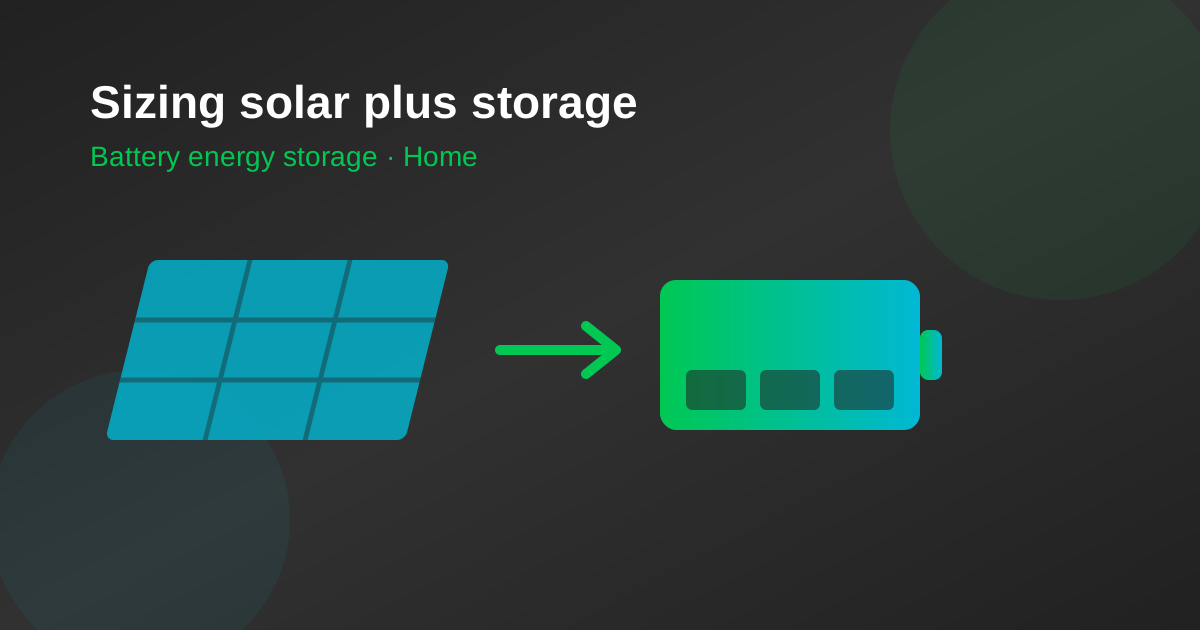
Array size is roughly your target daily generation divided by that per-kW figure. Size generously enough that summer noon produces surplus; that surplus is what makes storage worthwhile.
Step 2: find your evening consumption
This is the step almost everyone skips. A battery is only useful for the units you consume when the sun is not shining.
Read your meter at sunset and again at sunrise for a week. The difference is your night consumption. Do it in both a summer and a winter week if you can — air conditioning and geysers move this number a great deal.
Step 3: size the battery
- •Take your average night consumption in units (kWh)
- •Decide what share you want covered — covering 100% of the worst night is expensive; most people target a typical night
- •Divide by the round-trip efficiency of the system, since some energy is lost going in and out
- •Add margin for depth of discharge — you do not want to run the pack flat daily
The result is your target usable capacity in kWh. Note the word usable: ask vendors whether the capacity they quote is nameplate or usable, because the difference can be substantial.
Step 4: check the power rating separately
Capacity in kWh tells you how much energy is stored. It says nothing about how fast you can draw it. If your evening peak includes an air conditioner, a pump and a geyser, the inverter and battery must supply that instantaneous power in kW, or things will trip regardless of how many kWh are sitting in the pack.
Our guide to kW versus kWh explains the distinction in more depth; it was written for commercial systems but the principle is identical at home.
Step 5: work out the payback honestly
Annual saving is the units you shift from grid to stored solar, multiplied by the gap between your import tariff and whatever you would have been paid to export them. Divide the installed cost by that annual saving for a simple payback in years.
Then sanity-check it against the warranty period. If simple payback is longer than the battery’s warranted life, the system is being justified on backup value rather than savings — which is a perfectly good reason to buy it, but it should be said out loud.
Common sizing mistakes
- •Sizing the battery from total daily consumption instead of night-time consumption
- •Forgetting that a standard grid-tied inverter cannot charge a battery
- •Comparing nameplate capacity against usable capacity between two quotes
- •Ignoring where the battery will physically live — ventilation and heat matter to its life
- •Assuming today’s net metering terms will hold for the whole payback period
Frequently asked questions
How do I calculate the battery size for my home solar system?+
Start from your evening and night consumption, not your total daily use. Work out how many units you consume after sunset, decide what share of that you want to cover from stored solar, then add margin for round-trip losses and for not discharging the pack fully. That figure in kWh is your target battery size.
Do I need a special inverter for solar plus battery?+
Usually yes. A standard grid-tied solar inverter cannot charge a battery. You need a hybrid inverter, or a separate battery inverter alongside the existing one. Confirm compatibility before buying the battery — retrofitting storage to an existing solar system is where most cost surprises appear.
Is it better to add more panels or more battery?+
Generally add panels first until you are generating comfortably more than you consume during daylight, then add storage to move the surplus into the evening. A battery with nothing surplus to store is an expensive backup device, not a solar system.
Thinking about upgrading?
Talk to our team about the right pack for your vehicle, and about EMI options that keep the monthly outgo close to what you already spend.
Get in touch