Lithium vs Tubular Inverter Battery for Indian Homes: Which Should You Buy?
Tubular lead-acid still dominates Indian home backup, and lithium costs more upfront. Compared across cost per cycle, space, maintenance and safety, the answer depends on how often you actually lose power.
Published: 14 August 2026
Home storage · 7 min read
The comparison that matters is cost per cycle
A tubular battery is dramatically cheaper on the day you buy it. That is a real advantage and it is why they still dominate Indian homes. But an inverter battery is a consumable, and the honest comparison is cost per cycle delivered, not price on the invoice.
Divide the price by the rated cycles. Do it for both. If your area loses power daily, you cycle the battery daily, and the arithmetic usually favours lithium comfortably. If you lose power a handful of times a year, you will replace a tubular battery on age rather than cycles, and the case for lithium weakens.
Side by side
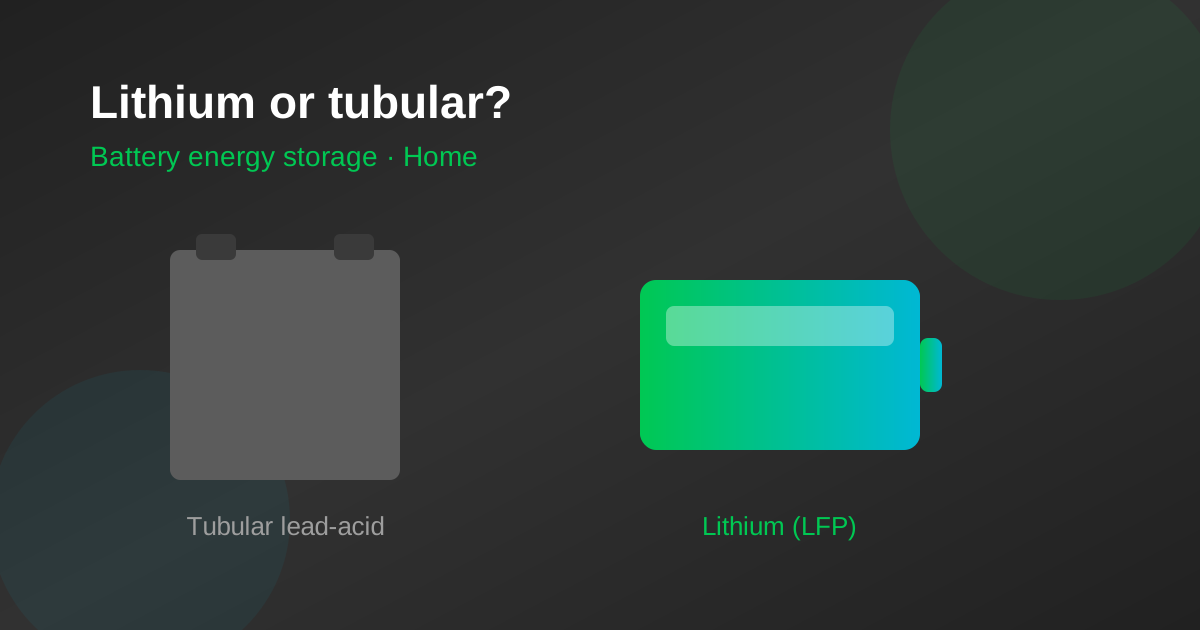
| Tubular lead-acid | Lithium (LFP) | |
|---|---|---|
| Upfront cost | Much lower | Higher |
| Cycle life | Low | Several times higher |
| Space and weight | Bulky and very heavy | Compact and far lighter |
| Maintenance | Periodic water topping, terminal cleaning | Essentially none |
| Usable depth of discharge | Limited without shortening life | Much deeper |
| Capacity towards end of life | Fades noticeably | Holds up, then declines |
| Charging time | Slower | Faster |
| Ventilation | Vents gas — needs open, ventilated placement | Sealed, but still needs ventilation and cool placement |
| Heat tolerance | Poor — Indian summers shorten life sharply | Better, but heat still ages it |
Where lithium clearly wins
- •Frequent or long outages, because you are cycling the battery hard and often
- •Flats and small homes, where a bank of tubular batteries is genuinely difficult to place
- •Pairing with rooftop solar, where deeper daily cycling is the whole point
- •Households that will not remember to top up water every few months
- •Upper floors and locations where lifting a tubular bank is a problem in itself
Where tubular still makes sense
- •Infrequent outages, where the battery ages out rather than cycling out
- •Tight upfront budgets where the lithium premium simply is not available
- •Locations with established local service for lead-acid and none for lithium
That last point is underrated. A cheaper technology that someone nearby can actually service beats a better one that nobody can.
If you switch, do not improvise
A lithium pack is not a drop-in replacement for a tubular bank on every system. The charging profile is different, and a lead-acid charger or an old inverter’s charging logic can damage a lithium pack.
- •Confirm the inverter is lithium-compatible, or budget for a new one
- •Never use a lead-acid charger or charging profile on a lithium pack
- •Confirm voltage compatibility, physical fit and secure mounting
- •Have the changeover done by a qualified technician
- •Hand the old battery to an authorised recycler — lead-acid is hazardous waste and has real scrap value
Frequently asked questions
Is a lithium inverter battery better than tubular?+
Lithium delivers many more cycles, takes far less space, needs no water topping, and holds usable capacity better towards end of life. Tubular lead-acid is much cheaper upfront. If you cycle the battery often — frequent or long outages — lithium usually wins on cost per cycle. For rare outages, tubular can still make sense.
How long does a tubular battery last compared to lithium?+
Both are measured in charge cycles rather than years. A tubular battery in regular use is typically replaced far sooner than a comparable LFP pack, which is generally specified in the low thousands of cycles. Actual life depends heavily on depth of discharge, temperature and maintenance.
Do lithium home batteries need maintenance?+
No water topping and no terminal cleaning of the kind tubular batteries need. They still need sensible placement — ventilated, out of direct heat — and periodic inspection of connections and mountings. The maintenance burden is much lower, not zero.
Thinking about upgrading?
Talk to our team about the right pack for your vehicle, and about EMI options that keep the monthly outgo close to what you already spend.
Get in touch