Sizing a Commercial BESS: kW versus kWh, C-Rate and Duty Cycle Explained
The two numbers that define a battery system are constantly confused, and getting the relationship wrong is the most common and most expensive sizing mistake.
Published: 14 August 2026
C&I storage · 7 min read
Two numbers, constantly confused
Every battery system is described by two independent ratings, and quotes routinely present only one.
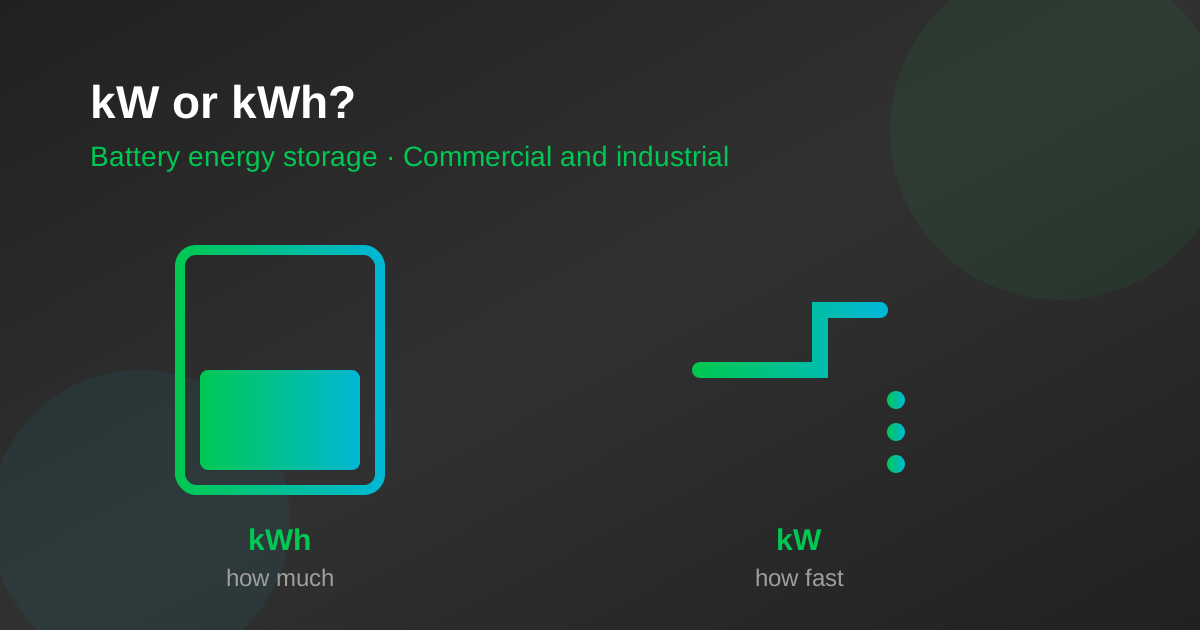
Energy, in kWh, is how much is stored in total. Power, in kW, is how fast it can be delivered or absorbed at any instant.
The tank analogy is exact enough to be useful: kWh is the size of the tank, kW is the width of the pipe. A large tank with a narrow pipe cannot serve a sudden demand. A wide pipe on a small tank empties in minutes.
C-rate ties them together
C-rate is simply the ratio. A system rated 1C delivers its full stored energy in one hour. 0.5C takes two hours. 2C takes thirty minutes.
So a 500 kWh system at 1C is a 500 kW system; the same 500 kWh at 0.5C is 250 kW. When a vendor quotes only kWh, the C-rate is the missing half of the specification, and it is where a cheaper system usually differs.
Different jobs need different shapes
| Application | Needs | Typical shape |
|---|---|---|
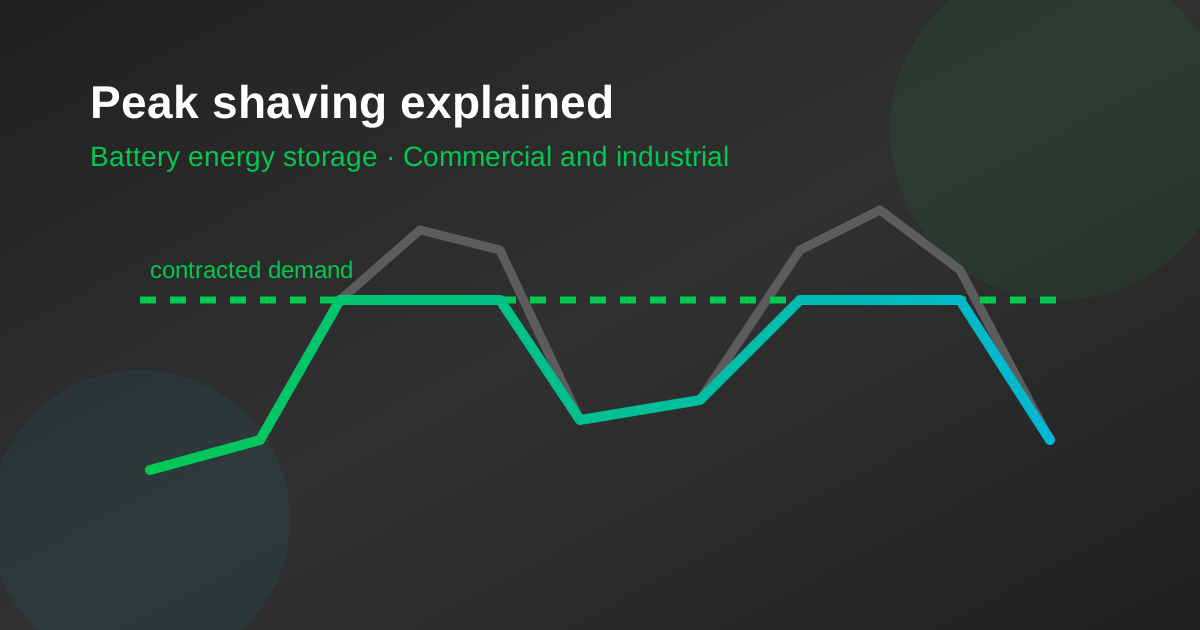
| Peak shaving | High power, short duration | Higher C-rate, less energy |
| Solar shifting | Moderate power, long duration | Lower C-rate, more energy |
| Backup power | Enough power for the load, energy set by outage length | Driven by duration required |
| Power quality support | Very high power, very short duration | High C-rate, little energy |
A site doing several of these needs sizing that satisfies the most demanding requirement in each dimension separately — the highest kW any application needs, and the highest kWh any application needs. They rarely come from the same use case.
Usable capacity is not nameplate capacity
Nameplate kWh is the theoretical total. Usable kWh is what the system will actually let you take out, after allowing for depth-of-discharge limits set to protect cycle life.
When comparing quotes, insist both are expressed the same way. A system quoted on nameplate will look cheaper per kWh than one quoted on usable capacity, while delivering less.
Degradation over the contract life
Capacity fades with cycles. A system sized to exactly meet requirements on day one will fail to meet them in year five.
Serious proposals either oversize at the start so the end-of-life capacity still meets the requirement, or include augmentation — adding capacity partway through the life. Ask which approach the quote assumes, and what the end-of-life capacity is guaranteed to be.
Round-trip efficiency
Some energy is lost putting it in and taking it out. Round-trip efficiency captures this, and it matters directly to any arbitrage business case: if you buy at a low tariff and lose a share of it before selling into a high one, the spread you actually capture is narrower than the tariff difference suggests.
Ask whether the quoted efficiency is at the cells, at the inverter terminals, or at the point of connection. These are different numbers and only the last one is what you experience.
The sizing checklist
- •Twelve months of interval load data, at fifteen-minute resolution or better
- •The kW requirement, from the tallest peak you intend to cover
- •The kWh requirement, from the longest duration you intend to cover
- •Usable rather than nameplate capacity, stated explicitly
- •Assumed cycles per year, and the resulting capacity at end of contract
- •Round-trip efficiency at the point of connection
- •What happens when the system cannot meet its duty — who carries that risk
Frequently asked questions
What is the difference between kW and kWh in a battery system?+
kW is power — how fast energy can flow in or out at any moment. kWh is energy — how much is stored in total. A tank analogy works: kWh is the size of the tank, kW is the width of the pipe. A system can have plenty of one and not enough of the other.
What is C-rate in battery storage?+
C-rate expresses power relative to capacity. A 1C system can deliver its full energy in one hour; 0.5C takes two hours; 2C takes half an hour. It is a convenient shorthand for the ratio between the kW and kWh ratings of a system.
How do I know what duty cycle my site needs?+
It comes from interval load data. Peak shaving typically needs high power for short durations, so a higher C-rate. Solar shifting needs more energy over longer durations, so a lower C-rate. Sites doing both need the sizing to satisfy the more demanding requirement in each dimension.
Thinking about upgrading?
Talk to our team about the right pack for your vehicle, and about EMI options that keep the monthly outgo close to what you already spend.
Get in touch