Electric Scooter Battery Price in India: What Actually Decides the Cost
Why two batteries with identical labels can differ enormously in price, which cost differences are worth paying for, and how to compare quotes on something other than the number at the bottom.
Published: 14 August 2026
Buying guide · 7 min read
The label does not set the price
Search for an electric scooter battery price in India and the quotes come back across a startling range for what looks like the same product. The label — say 60V 30Ah lithium — is the least informative part of the offer.
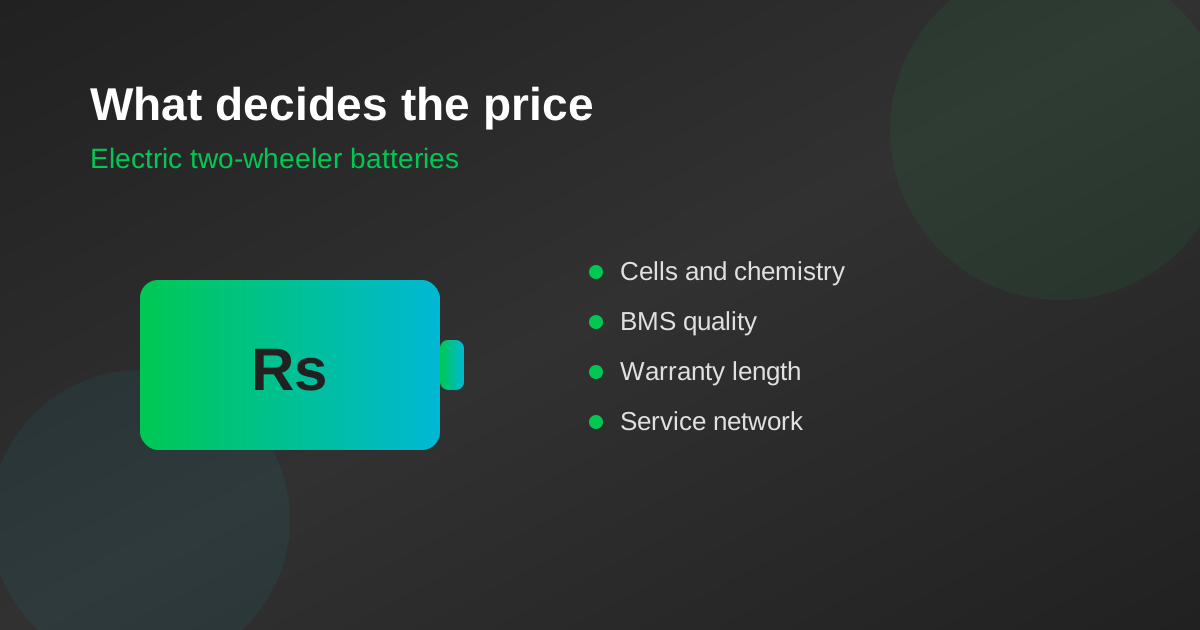
Six things actually move the number.
1. Cell grade and chemistry
Cells are graded. A-grade cells are matched for capacity and internal resistance and come with traceable documentation. Lower grades — including cells recovered from other packs — cost far less and behave far worse, especially in a series string where one weak cell caps the whole pack.
Chemistry matters too: LFP, NMC and LTO sit at different price points for good reasons. See our chemistry comparison.
2. The BMS
A battery management system that monitors every cell, balances them, and cuts off on over-current and on both high and low temperature costs meaningfully more than one that watches pack voltage alone. It is also the difference between a pack that lasts and a pack that fails unpredictably.
This is the single most common place where a cheap pack is made cheap.
3. Pack construction and sealing
Welded nickel strips versus soldered joints, proper cell spacing for airflow, vibration isolation, and an enclosure that genuinely meets its IP claim — all of this costs money and none of it is visible in a photograph.
4. Warranty length, and what it excludes
A longer warranty is priced into the pack, because the manufacturer is carrying real risk. That is not a reason to avoid it — it is a signal about how long they expect the pack to last.
Read the exclusions before comparing two warranties. A three-year warranty that excludes commercial use is shorter than a two-year one that does not.
5. Service network
A pack sold with local service costs more than one sold from a listing. When something goes wrong in year two, that difference is the difference between two days off the road and three weeks.
6. Certification and testing
Testing to Indian safety standards costs money per model, and companies that do it price it in. Ask to see the test report rather than a logo — see our guide to AIS 156.
How to compare two quotes properly
- •Convert both to price per kWh — multiply volts by amp-hours, divide by 1,000, then divide the price by that
- •Divide price by lifetime kilometres (daily range × rated cycles) for cost per kilometre
- •Put the two warranty exclusion lists side by side
- •Ask both sellers what happens when a module fails in year two, and compare the answers
- •Confirm the charger is matched and included, not an extra
The pack that wins on price per kWh is not always the one that wins on cost per kilometre. The second number is the one you actually pay.
If the upfront figure is the obstacle
EMI financing exists precisely for this, and the comparison worth making is monthly outgo against what you already spend on fuel or replacement batteries. Our finance guide explains what to read on the Key Fact Statement before accepting any offer. Wingzman is not a lender; loans come from lenders regulated by the Reserve Bank of India.
Frequently asked questions
Why do electric scooter battery prices vary so much?+
Price is driven by cell grade and chemistry, the quality of the battery management system, pack construction and sealing, the length and terms of the warranty, and whether a service network stands behind it. Two packs with the same voltage and amp-hour label can differ on every one of those.
How is a battery priced — by Ah or by kWh?+
Compare by kilowatt-hours, because that already combines voltage and amp-hours. Price per kWh is the only figure that lets you compare a 48V pack against a 60V one honestly. If a seller quotes only amp-hours, multiply volts by amp-hours yourself.
Is a cheaper battery ever the right choice?+
Sometimes — if the vehicle is near the end of its life, or usage is light and occasional. But for daily commercial or commuting use, the cheaper pack usually costs more per kilometre because it is replaced sooner. Run the cost-per-kilometre calculation before deciding.
Thinking about upgrading?
Talk to our team about the right pack for your vehicle, and about EMI options that keep the monthly outgo close to what you already spend.
Get in touch