Financing an E-Rickshaw Battery: The Questions to Ask Before You Sign
The instalment is the number everyone compares, and it is the wrong one. Here is what to read on a battery loan document, which charges people miss, and what protections you already have.
Published: 21 July 2026
Finance · 7 min read
The instalment is not the comparison
Two offers, one at a lower monthly instalment than the other, can easily cost you more in total. A longer tenure shrinks the monthly figure and grows the total. A processing fee deducted upfront shrinks what you actually receive without changing the instalment at all.
There are only two comparisons worth making. The first is total amount repaid across the whole tenure. The second is monthly outgo against what you already spend — the replacement sets, the repair days, the lost fares. Instalment against zero is not a comparison; it is a way of talking yourself out of a decision.
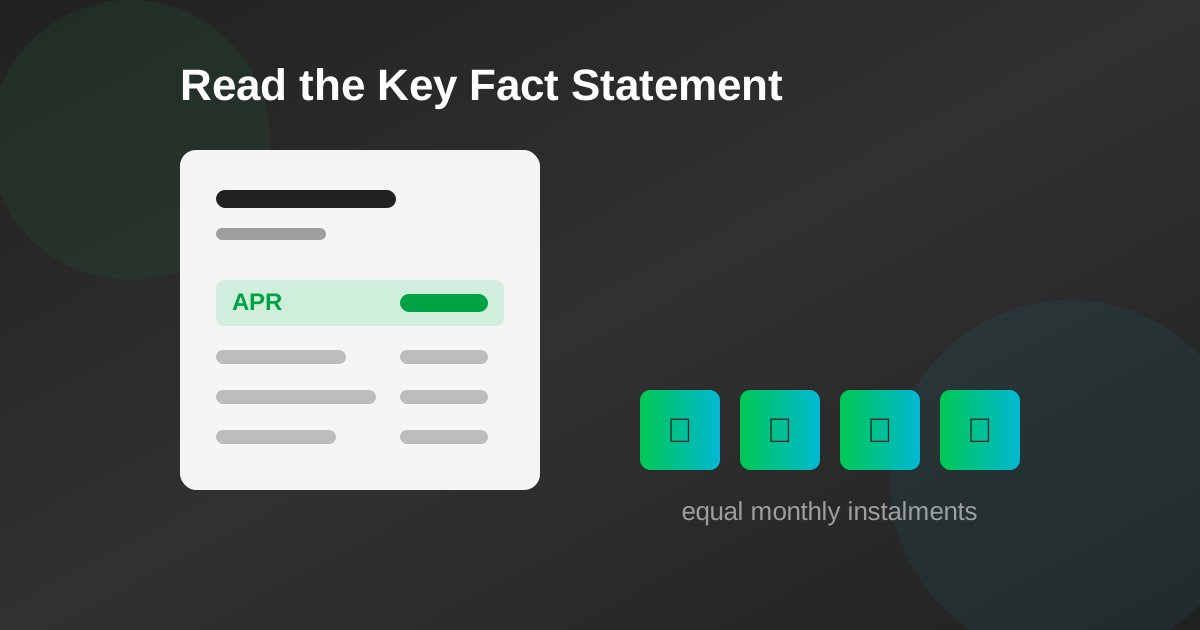
The Key Fact Statement is the document that matters
Under the Reserve Bank of India’s digital lending rules, you must be given a Key Fact Statement (KFS) before you accept a loan. It is short, standardised, and it is the one document you should insist on reading in full.
Five things to find on it:
- •The APR. The Annual Percentage Rate is the all-inclusive annualised cost — interest plus fees. This is the number that makes two offers genuinely comparable. A low interest rate with high fees shows up here; it hides everywhere else.
- •Who the lender is. The KFS names the regulated entity actually giving you the loan. Know that name before you sign.
- •Tenure and instalment schedule. How many payments, of what size, starting when.
- •Every fee, itemised. If a charge is not on the KFS, it should not appear on your account later.
- •Penal charges and the cooling-off period. What a late payment costs, and how long you have to exit the loan without penalty.
Daily, weekly or monthly?
Driver income arrives daily, so a daily or weekly repayment can be genuinely easier to manage than one large monthly cheque. That is a real advantage, not a gimmick.
Two things to check before choosing it. First, whether the collection method carries any additional charge — it should be reflected in the APR, not added on the side. Second, what happens on a bad day. A schedule with no tolerance for a slow week can turn one poor stretch into penal charges. Ask how missed payments are treated before you need the answer.
The charges people miss
- •Processing or documentation fee, often deducted from the disbursed amount
- •Insurance bundled with the loan — ask whether it is optional, and what it covers
- •Penal charges for late or missed instalments
- •Foreclosure or prepayment charges, if you want to close early
- •Cheque bounce or mandate failure charges
None of these are automatically unfair. All of them should be written on the KFS before you sign, and none should be a surprise afterwards.
Protections you already have
- •A cooling-off period. Digital lending rules give you a window after signing to exit by repaying the principal and the proportionate cost, without penalty.
- •Named recovery agents. If recovery action becomes necessary, the lender must tell you in advance who is authorised to contact you. Nobody outside that should be at your door.
- •Money moves directly. Disbursal goes from the lender to your account, and repayments go from your account to the lender. Loan money should not be routed through a seller or agent.
- •A grievance route with a deadline. Every regulated lender and service provider must publish a grievance officer and resolve complaints within a defined timeline, with escalation to the Reserve Bank of India if they do not.
Never do these three things
- •Never sign a blank or partly-filled document, and never hand over blank signed cheques
- •Never rely on a verbal promise about a rate, a fee or a waiver — if it is not in the KFS, it does not exist
- •Never let anyone else keep your only copy of the loan papers
Where Wingzman fits in
To be clear about our own role: Wingzman is not a lender. We sell and service batteries, and we act as a lending service provider for banks and non-banking financial companies regulated by the Reserve Bank of India. The loan itself is granted by the regulated entity named in your Key Fact Statement, and every credit decision is theirs.
We tell you this because it changes who you go to with what: battery questions come to us, loan questions go to the lender, and our grievance policy sets out both paths.
Thinking about upgrading?
Talk to our team about the right pack for your vehicle, and about EMI options that keep the monthly outgo close to what you already spend.
Get in touch