LFP vs NMC vs LTO: Which Battery Chemistry Is Right for Your Electric Scooter?
The chemistry inside the pack decides its life, safety, weight and price more than any other single factor. A plain comparison of LFP, NMC, LTO and lead-acid for Indian two-wheelers.
Published: 14 August 2026
Chemistry · 9 min read
Chemistry is the decision underneath every other decision
Two electric scooter batteries can share the same voltage, the same capacity and a similar price, and behave completely differently after two years. The reason is usually chemistry — what the cells are actually made of.
Most sellers say “lithium” and stop there. Lithium is a category, not a specification. Here is what the real options mean for an Indian two-wheeler.
The comparison, side by side
| LFP | NMC | LTO | Lead-acid | |
|---|---|---|---|---|
| Full name | Lithium iron phosphate | Nickel manganese cobalt | Lithium titanate | Lead-acid |
| Cycle life | Highest of the common three | Good | Exceptional | Lowest |
| Thermal stability | Very good | Moderate | Excellent | Good but vents gas |
| Energy per kg | Moderate | High | Low | Very low |
| Weight for same range | Heavier than NMC | Lightest | Heaviest lithium | Heaviest overall |
| Cost per kWh | Moderate | Higher | Very high | Lowest upfront |
| Cold performance | Moderate | Moderate | Best | Poor |
| Typical use | Commuter scooters, e-rickshaws, storage | Performance scooters, tight packaging | Specialist and fast-cycling use | Legacy and low-cost vehicles |
Relative comparisons, not absolute figures — exact numbers vary by cell supplier and pack design. Always ask for the specific figures on the spec sheet of the pack you are buying.
LFP — the default for Indian commuting
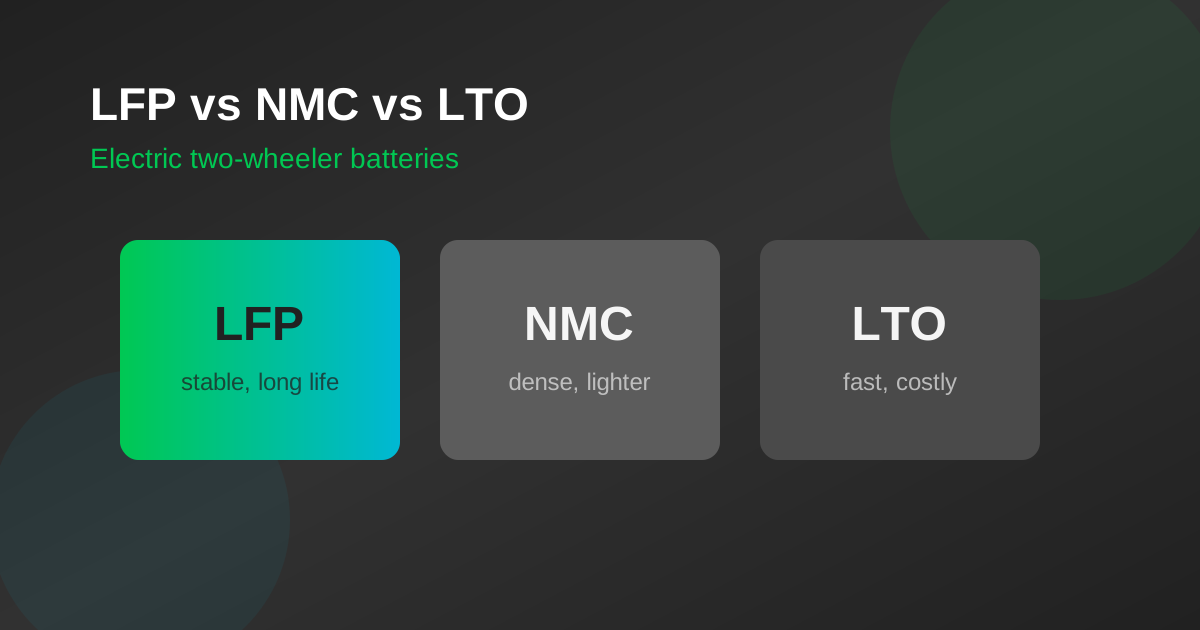
Lithium iron phosphate has become the mainstream choice for commuter two-wheelers in India, and the reasons are practical rather than fashionable. It has the longest cycle life of the common chemistries, it is the most thermally forgiving, and it does not use cobalt.
The trade-off is energy density. An LFP pack is bigger and heavier than an NMC pack of the same energy. On a commuter scooter doing 40–60 km a day that rarely matters. On a performance machine where every kilo counts, it does.
Choose LFP if: you commute daily, you keep vehicles for years, you park outdoors in a hot city, or you want the lowest cost per kilometre over the vehicle’s life.
NMC — energy density where space is tight
Nickel manganese cobalt cells store more energy for their weight and volume, which is why they appear in performance scooters and in vehicles where the battery bay is small. If you want maximum range from a light, compact pack, NMC delivers it.
The trade-offs are real. NMC is less thermally stable than LFP, which puts more weight on the quality of the BMS and pack construction. Cycle life is typically lower. And cobalt content makes it more expensive and more exposed to raw material price swings.
Choose NMC if: range and weight matter more than absolute longevity, and you are buying from a manufacturer whose thermal design and BMS you actually trust.
LTO — excellent, and probably not for you
Lithium titanate is remarkable: enormous cycle life, very fast charging, and the best cold-weather and safety behaviour of the group. It is also expensive and has low energy density, so packs are large and heavy for the range they give.
You will rarely be offered LTO on a consumer two-wheeler in India, and if you are, check the price and the weight carefully before being impressed by the specification.
Lead-acid — why it persists
Lead-acid is still sold because it is cheap on the day of purchase. It is heavy, its usable capacity fades noticeably towards end of life, and it delivers a fraction of the cycles.
The honest comparison is cost per kilometre over the whole life of the pack, not the quote. Our three-year maths guide shows the calculation; it applies to two-wheelers just as it does to e-rickshaws.
Chemistry is necessary, not sufficient
A well-built NMC pack beats a badly built LFP pack every time. Once you have decided the chemistry, the questions that decide quality are the same ones as always: cycle life with stated conditions, BMS protections listed individually, IP rating, testing to Indian safety standards, warranty exclusions, and who services it locally.
Our spec sheet guide covers each of those in plain language.
Frequently asked questions
Is LFP or NMC better for an electric scooter in India?+
LFP is generally the safer and longer-lasting choice in Indian ambient temperatures, with higher cycle life and better thermal stability. NMC packs more energy into less weight and space, which suits performance scooters and tight packaging. For daily commuting and hot climates, LFP usually wins; for maximum range in a light package, NMC has the edge.
Which battery chemistry is safest for a two-wheeler?+
LFP is the most thermally stable of the common lithium chemistries — it tolerates higher temperatures before becoming unstable and releases less energy if it does fail. LTO is even more stable but is expensive and rarely used in consumer two-wheelers. Chemistry is only part of safety: pack construction, BMS quality and testing to Indian standards matter just as much.
Why do lithium scooter batteries cost more than lead-acid?+
Lithium cells cost more to make, and a lithium pack includes a battery management system that lead-acid does not need. Over the life of the vehicle the comparison usually reverses, because lithium delivers several times the cycles — compare cost per kilometre rather than purchase price.
Can I replace my scooter lead-acid battery with a lithium one?+
Only with a pack designed for your vehicle. Voltage must match the controller, physical dimensions and mounting must fit, and the charger has to be matched to the new chemistry. Never use a lead-acid charger on a lithium pack. Have the swap done by a qualified technician, and check whether it affects your vehicle warranty.
Thinking about upgrading?
Talk to our team about the right pack for your vehicle, and about EMI options that keep the monthly outgo close to what you already spend.
Get in touch