How Long Does an Electric Scooter Battery Last in India?
Battery life is measured in charge cycles, not years — and Indian heat, charging habits and riding style change the answer considerably. Here is how to estimate yours.
Published: 14 August 2026
Performance · 7 min read
Cycles, not years
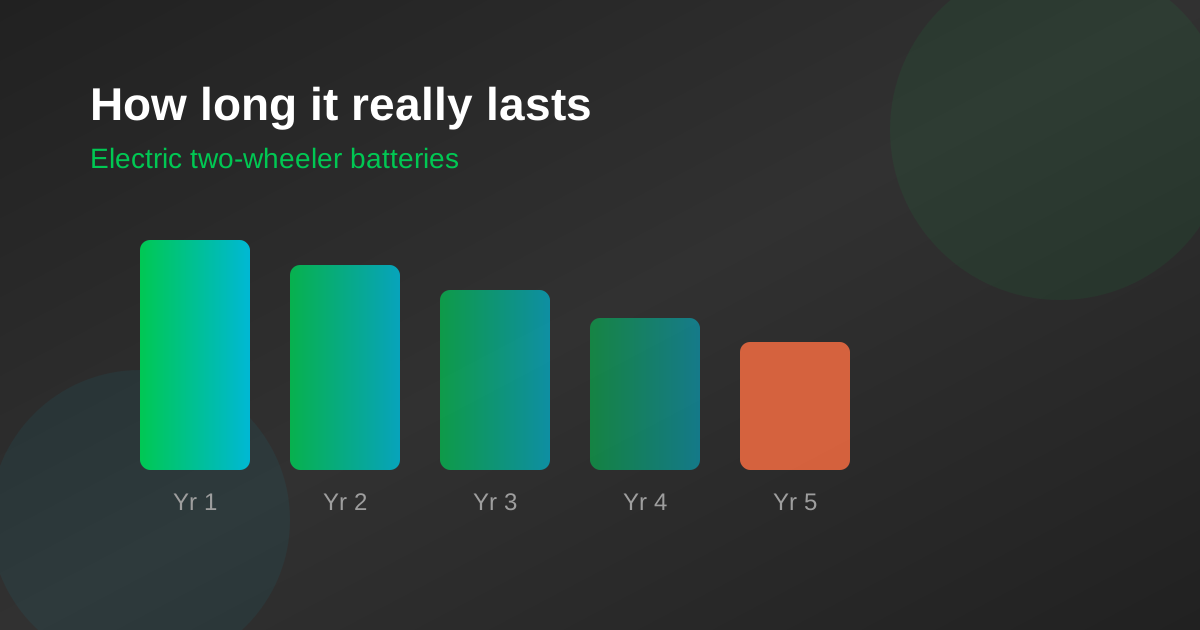
The question “how long does an electric scooter battery last” has no answer in years, because a battery does not age by the calendar in any useful way. It ages by charge cycles — one full charge and discharge.
Two riders buying identical scooters on the same day will reach end of life years apart if one commutes 60 km daily and the other rides at weekends. Estimate your own life by dividing the pack’s rated cycles by how many cycles you use per year.
What the rating actually promises
A cycle-life figure only means something with three qualifiers attached: the depth of discharge it assumes, the temperature it assumes, and the capacity retention that defines end of life — usually 80%.
What shortens it in Indian conditions
- •Heat, above everything. Parking in direct sun through an Indian summer permanently costs capacity. This is the largest single factor most riders control and ignore.
- •Charging a hot pack. Plugging in straight after a long ride in May stacks two heat loads together.
- •Routinely running to empty. Deep discharge every single day is harder on cells than plugging in at 20–30%.
- •Holding at 100%. Leaving a pack permanently at full charge is mildly stressful. Charging to 80–90% on ordinary days is a free habit worth having.
- •Non-matched chargers. The most common avoidable cause of early failure, and usually a warranty-voiding one.
- •Sustained hard riding. High current draw produces heat. Aggressive acceleration is a real, measurable cost.
Our charging habits guide covers the daily routine in detail.
How to tell where yours is now
Impressions are unreliable, and range varies with load, weather and traffic. Run one controlled test instead: same route, same load, from a full charge, and write down the kilometres. Repeat every few months.
Two numbers taken the same way tell you more than a year of feeling that something is off. If your pack reports state of health through an app, log that alongside the kilometres.
Gradual fade versus sudden collapse
These are different problems and it is worth knowing which you have. A slow, smooth decline across many months is normal ageing. A sudden drop over days, with the vehicle cutting out while the display still shows charge, usually means one cell group has fallen behind the rest — see our explainer on cell balancing.
The second case is sometimes repairable. The first is simply the pack reaching the end of what you paid for.
Frequently asked questions
How many years does an electric scooter battery last?+
Life is counted in charge cycles rather than years, so it depends on how often you charge. A quality LFP pack is typically rated in the low thousands of cycles to 80% capacity retention. Someone charging daily will reach that point far sooner than someone charging twice a week, even though both packs are the same age.
What is considered the end of a battery life?+
Industry convention treats end of life as the point where usable capacity falls to about 80% of what it was when new. The pack still works below that — it simply gives progressively less range, and most riders replace when the daily route stops being comfortably achievable.
Does fast charging reduce electric scooter battery life?+
Sustained fast charging over years is harder on cells than slower charging, because it generates more heat. Occasional fast charging is not a problem. If you have the choice, use normal charging on ordinary days and save fast charging for when you need it.
Thinking about upgrading?
Talk to our team about the right pack for your vehicle, and about EMI options that keep the monthly outgo close to what you already spend.
Get in touch