Seven Charging Habits That Add Years to a Lithium Battery
Most lithium packs in India die early because of how they are charged, not because of what they are made of. These seven habits cost nothing and change the arithmetic.
Published: 11 August 2026
Maintenance · 5 min read
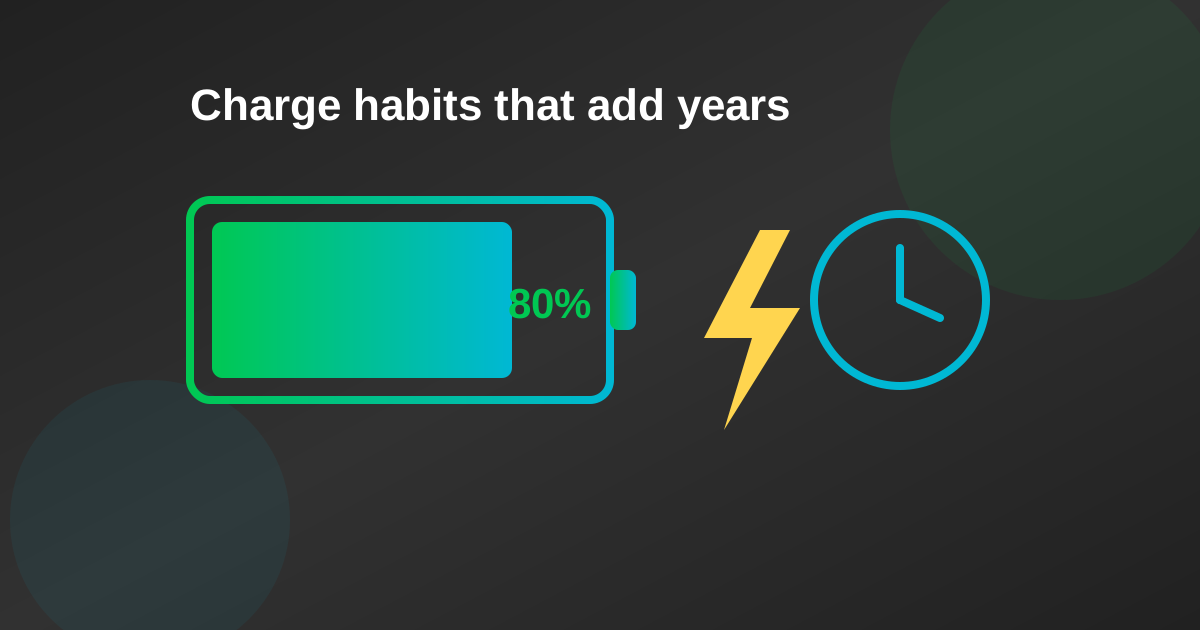
Habits are cheaper than replacements
Lithium packs rarely fail suddenly. They fade — a little range lost each month until the last trip of the day stops being possible. Much of that fade is not manufacturing quality. It is charging behaviour, repeated a few hundred times.
None of what follows costs money. All of it buys months.
1. Use the charger that came with the pack
A matched charger talks to the pack’s BMS and follows the correct voltage and current profile. A cheap replacement from the market may deliver the right voltage on average and something considerably less careful in between. This is the single most common avoidable cause of early failure — and it usually also voids the warranty.
2. Stop treating a full charge as the goal
Unlike lead-acid, lithium chemistry does not need topping up to 100% to stay healthy. Holding a pack at full charge for long periods is mildly stressful for the cells. If your daily route does not need the last 20%, charging to around 80–90% on ordinary days is a habit worth having, with a full charge before a long run.
3. Do not run it flat as a routine
The BMS will cut off before real damage occurs, but repeatedly driving to that cut-off keeps the pack at its most stressed state. Plugging in at 20–30% remaining rather than at 2% is easier on the cells and costs you nothing except planning.
4. Let it cool before you plug in
A pack that has just finished a long loaded run in May is hot. Charging a hot pack compounds the thermal stress. Twenty to thirty minutes in shade before connecting is a small delay with a real payoff — and it matters most in exactly the months when it is least convenient.
5. Charge where there is air, not in a sealed corner
Charging in a closed, unventilated space traps heat around the pack and, in the rare event of a fault, removes every chance of noticing early. Charge in a ventilated area, away from anything flammable, and not in a doorway or stairwell that people would need to escape through.
6. Watch the supply, not just the battery
Loose plug points, thin extension cords and heavily fluctuating supply put stress on the charger, and the charger passes it on. Use a properly earthed point rated for the load, and stop using any cable or plug that gets warm.
7. Store at partial charge, never empty
If a vehicle will sit unused for weeks — a spare pack, a vehicle off the road for repair, a seasonal lull — leave the pack at roughly half charge, in a cool place, and top it back up to that level every couple of months. A lithium pack left fully discharged for a long period can fall into a state it never fully recovers from.
When to stop and call someone
Some symptoms are not maintenance issues. Stop using the pack and get it inspected if you see:
- •Any swelling or change in the shape of the casing
- •Unusual smell, smoke or heat during or after charging
- •A sudden, large drop in range over a few days
- •Visible damage to the casing, connectors or wiring
- •Water ingress after flooding, even if it seems to work
None of these get better by being ignored, and all of them are cheaper to deal with early.
Thinking about upgrading?
Talk to our team about the right pack for your vehicle, and about EMI options that keep the monthly outgo close to what you already spend.
Get in touch