A Scooter Company Just Signed a 20 GWh Grid Storage Deal
Ola Electric launched a utility-scale BESS on 15 August and signed an MoU with Axis Energy to explore up to 20 GWh by 2032. What transfers from two-wheelers to substations, what does not, and how to read a number like that.
Published: 26 August 2026
Grid storage · 7 min read
What happened
Written 26 August 2026. This is a memorandum of understanding and a product launch, not a supply contract with delivery dates. The distinction is the point of the last section.
Ola Electric launched Ola Mahashakti on 15 August 2026 — a utility-scale battery energy storage system it describes as designed and manufactured in India. It follows Ola Shakti, the company’s residential battery.
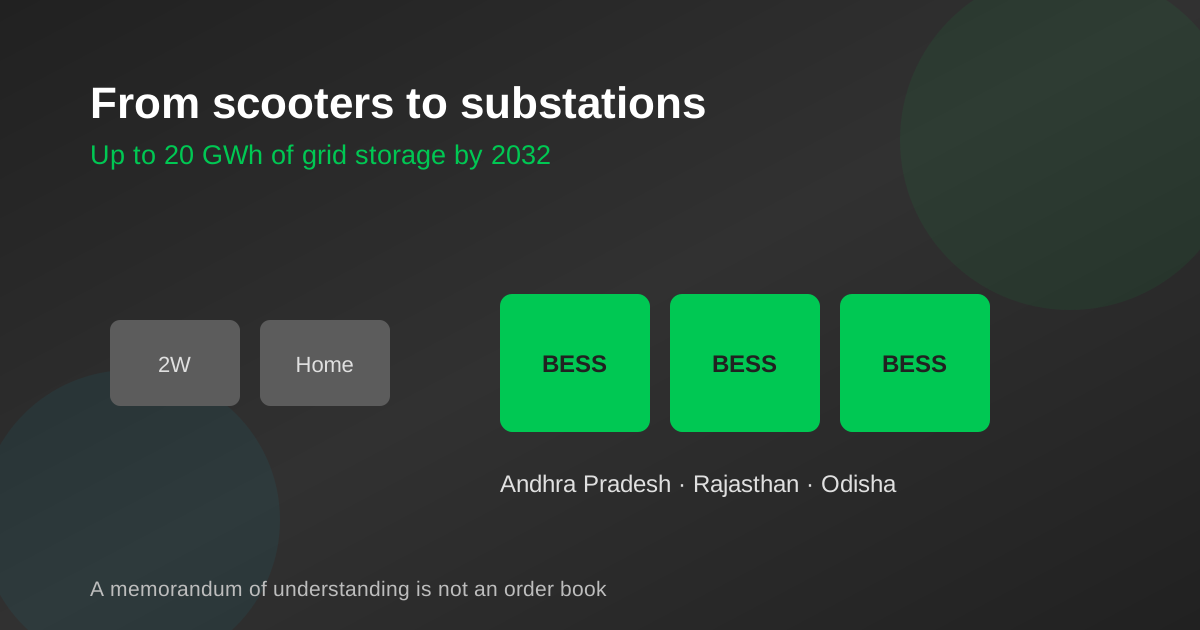
Alongside it, Ola signed a memorandum of understanding with Axis Energy Ventures to explore deploying up to 20 GWh of storage by 2032. Axis carries a pipeline of roughly 3.5 GW of storage-backed renewable projects and would use Ola’s systems across Andhra Pradesh, Rajasthan and Odisha. Ola calls it the first large-scale partnership for the Mahashakti platform.
Why a scooter company is doing this
It looks like a strange leap and it is not. An electric two-wheeler manufacturer at scale has already built the three things a storage business needs: cell procurement volume, pack engineering, and a BMS team that has learned its lessons on warranty claims from real vehicles.
What it has not built is the rest of a grid storage business — power conversion at megawatt scale, four-hour thermal management, utility-grade controls, grid compliance testing, twenty-year performance guarantees and the balance sheet to stand behind them. Those are genuinely different problems from a 4 kWh scooter pack, and they are where this kind of diversification usually gets hard.
The transferable asset is cell buying power and pack engineering. The untransferable one is everything between the pack and the substation — and on a grid project that is more than half the cost.
The number in context
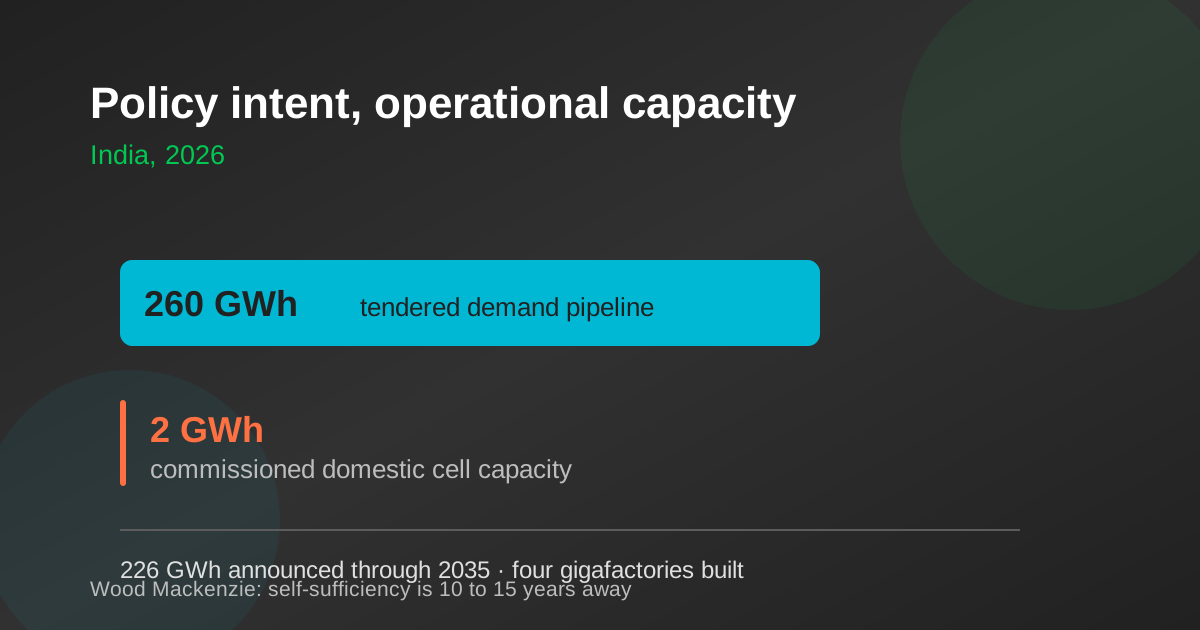
Twenty GWh by 2032 is a large figure. For scale: India’s entire commissioned domestic cell manufacturing capacity is around 2 GWh, and the country’s 2026 competitive tender pipeline is roughly 260 GWh. A single 20 GWh partnership would be a meaningful share of the latter and many times the former.
Which raises the obvious question about “designed and manufactured in India”. A system integrated in India is a real and useful thing, and it is not the same claim as cells made in India. Ola has its own cell programme; whether it supplies these systems, at what volume and at what cost against imports, is the part worth watching rather than the headline. Our note on the gap between India’s tender pipeline and its cell capacity sets out why that distinction keeps mattering.
How to read an MoU
- •An MoU is an agreement to explore. It carries no volume commitment, no price, no delivery schedule and generally no penalty for walking away. Treat the headline number as a ceiling on ambition, not a forecast.
- •"Up to" and "by 2032" are doing a lot of work. Six years is long enough for the counterparty pipeline, the cell supply and the tariff environment all to change.
- •The counterparty pipeline is the constraint. Axis has roughly 3.5 GW of storage-backed renewable projects; how much of that reaches financial close determines how much of the 20 GWh is ever ordered.
- •Watch for the first firm purchase order and the first commissioned megawatt-hour. Those are the events that convert an announcement into a business.
Why it still matters
Discount the number and something real remains. A domestic manufacturer entering utility-scale storage adds a bidder to tenders that have been thin on Indian integrators, puts local engineering resource behind grid-scale systems, and gives commercial buyers another source of after-sales support inside the country — which, on a twenty-year asset, is worth more than a few dollars per kWh.
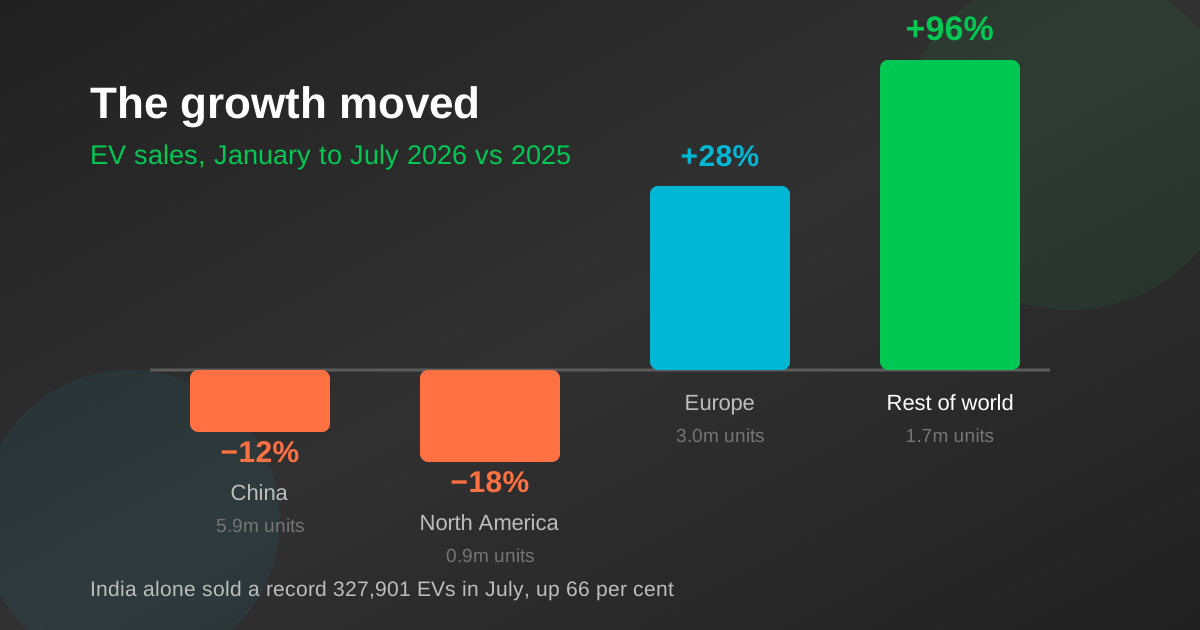
It also signals what the vehicle manufacturers can see coming. The same cells, the same suppliers and the same engineers serve both markets, and storage demand is growing faster than vehicle demand. Expect more of these announcements, and expect most of the GWh in them never to be built.
Sources
Reporting this piece draws on. Figures were correct as published; scheme terms and commodity prices move.
- Global battery storage news snippets: Ola Electric signs 20 GWh BESS MoU with Axis Energy & moreTaiyangNews
- India's battery storage self-sufficiency remains over a decade awayWood Mackenzie · 20 August 2026
Frequently asked questions
What is Ola Mahashakti?+
A utility-scale battery energy storage system launched by Ola Electric on 15 August 2026, described as designed and manufactured in India. It follows Ola Shakti, the company’s residential battery, and targets commercial, industrial and utility-scale applications.
Is the 20 GWh deal a confirmed order?+
No. It is a memorandum of understanding with Axis Energy Ventures to explore deploying up to 20 GWh by 2032. An MoU carries no volume commitment, no price, no delivery schedule and generally no penalty for walking away. Read the figure as a ceiling on ambition, not a forecast. The events that would convert it into a business are the first firm purchase order and the first commissioned megawatt-hour.
Why would an electric scooter maker move into grid storage?+
Because cell procurement volume, pack engineering and a BMS team that has learned its lessons on real warranty claims all transfer directly. What does not transfer is megawatt-scale power conversion, four-hour thermal management, utility-grade controls, grid compliance testing and twenty-year performance guarantees — which on a grid project are more than half the cost.
Does "manufactured in India" mean the cells are Indian?+
Not necessarily, and the distinction matters. A system integrated in India — enclosure, pack assembly, BMS, thermal design, controls — is a real and useful thing, but it is a different claim from cells made in India. India has roughly 2 GWh of commissioned cell capacity in total, so most cells in any Indian system today are imported.
Want this applied to your own numbers?
Every solution page carries a calculator that shows its own arithmetic — storage savings, lithium against lead-acid, and home pack sizing.
Get in touch