Can India Build Its Own Cell Industry? What It Would Actually Take
India assembles many packs and makes few cells. An honest assessment of what is already strong, what is missing in order of difficulty, and what genuinely favours India.
Published: 15 August 2026
Industry · 8 min read
Being honest about where India stands
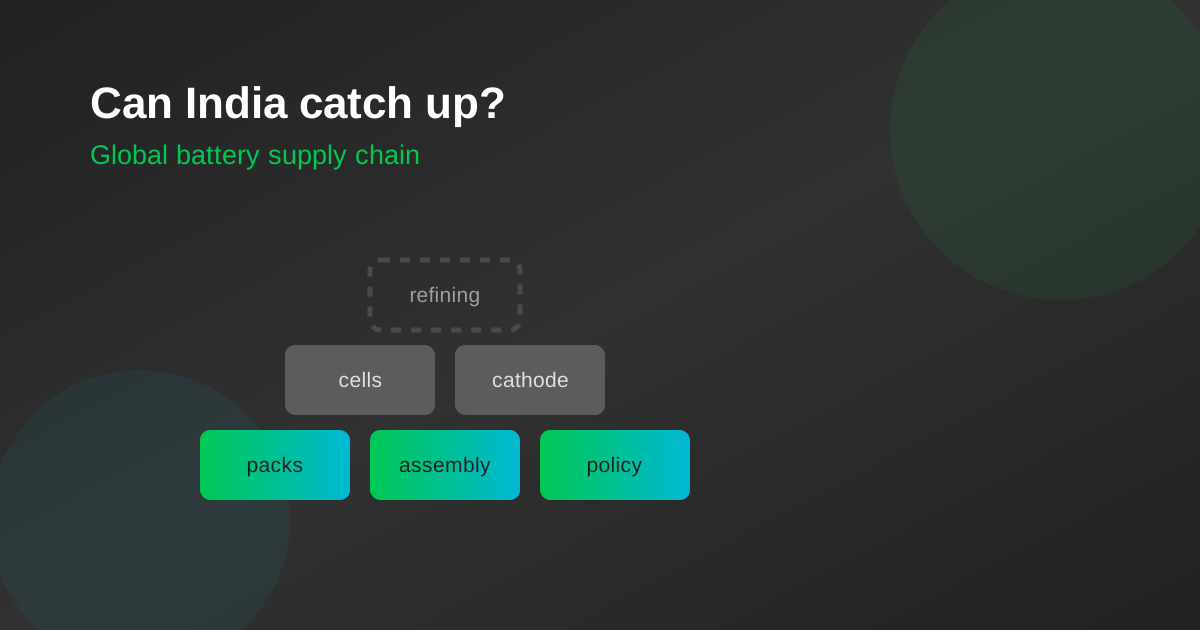
India assembles a great many battery packs and manufactures very few cells. Most packs sold here — including for e-rickshaws, electric two-wheelers and small storage — are built domestically around imported cells.
That is worth stating plainly, because “made in India” is used loosely in this market. Pack assembly here is real manufacturing that adds real value. It is not the same as making cells, and conflating the two makes it harder to see what still needs building.
What India already does well
- •Pack design and assembly, including for demanding commercial duty cycles
- •Battery management systems and the embedded software around them
- •Telematics and IoT integration, where the domestic software base is genuinely strong
- •Application engineering for local conditions — heat, dust, monsoon, road quality
- •Service networks, which are unglamorous and are a real competitive moat
These are not consolation prizes. For a driver in Indore, the difference between a good pack and a bad one is usually decided at these layers, not at the cell.
What is missing, in order of difficulty
- •Cell manufacturing at scale. Hard, capital-intensive, and being attempted through production-linked incentives. Three to four years per plant, and yields take time to mature.
- •Cathode and anode materials. Harder. Requires process knowledge that is not freely licensed and a supply of refined inputs.
- •Refining to battery grade. Hardest. Environmentally heavy, low margin, slow to permit, and the step where global concentration is most extreme. See our piece on the refining chokepoint.
- •Production equipment. The machines that make cells are themselves concentrated. A domestic gigafactory typically imports its tooling and its commissioning expertise.
Building only the first of these produces assembly at larger scale, not independence. That is still worth doing — it captures value and builds capability — but it should be described accurately.
What India has in its favour
- •A large domestic market that is already electric. The two- and three-wheeler segments are the volume story, and they are electrifying without needing anyone to be persuaded, because the economics work for commercial users.
- •Demand skewed to LFP. The chemistry India needs most avoids cobalt and nickel, which are the inputs where import dependence is most fraught.
- •Engineering depth in software and systems, which is where product differentiation increasingly sits.
- •Time. Stationary storage demand is arriving now and will grow for decades. This is not a closing window.
What this means when you buy
Ask suppliers which step actually happens here, and expect an honest answer. A firm that says “we assemble packs in India around imported LFP cells, and here are the cell test reports” is telling you more, and is more trustworthy, than one implying it makes everything.
Then judge the things that are genuinely domestic and genuinely decisive: BMS quality, thermal design, IP rating, warranty terms and whether anyone can service the pack in your city. Our spec sheet guide lists the questions.
Frequently asked questions
Does India manufacture lithium-ion cells?+
Very few relative to demand. Most packs sold in India, including for e-rickshaws and electric two-wheelers, are assembled domestically around imported cells. Pack assembly is real manufacturing that adds real value, but it is not the same as cell production, and the distinction is often blurred in marketing.
How long would it take India to become self-sufficient in batteries?+
Cell self-sufficiency is a decade-scale project, and the midstream — refining, cathode and anode materials — is harder and slower than the cells themselves. Production equipment is a further dependency. Near-term gains are more realistic at the pack, BMS, thermal design and service layers.
What does 'Made in India' mean on a battery?+
Usually that the pack was assembled in India around imported cells. That is legitimate and valuable, but ask the supplier which specific step happened here — pack assembly, cell manufacture or cathode production. A supplier who answers plainly and shows cell test reports is more trustworthy than one who implies it makes everything.
Thinking about upgrading?
Talk to our team about the right pack for your vehicle, and about EMI options that keep the monthly outgo close to what you already spend.
Get in touch