The Five-Minute Daily Check That Protects an E-Rickshaw Battery
A short routine, done every day, catches almost everything that turns into an expensive failure — and most of it takes less time than waiting for the first passenger.
Published: 12 August 2026
Battery care · 6 min read
Why a routine beats knowledge
Almost every driver already knows the individual facts in this article. Packs still fail early, because knowing something and checking it on a Tuesday morning in the middle of a shift are different things.
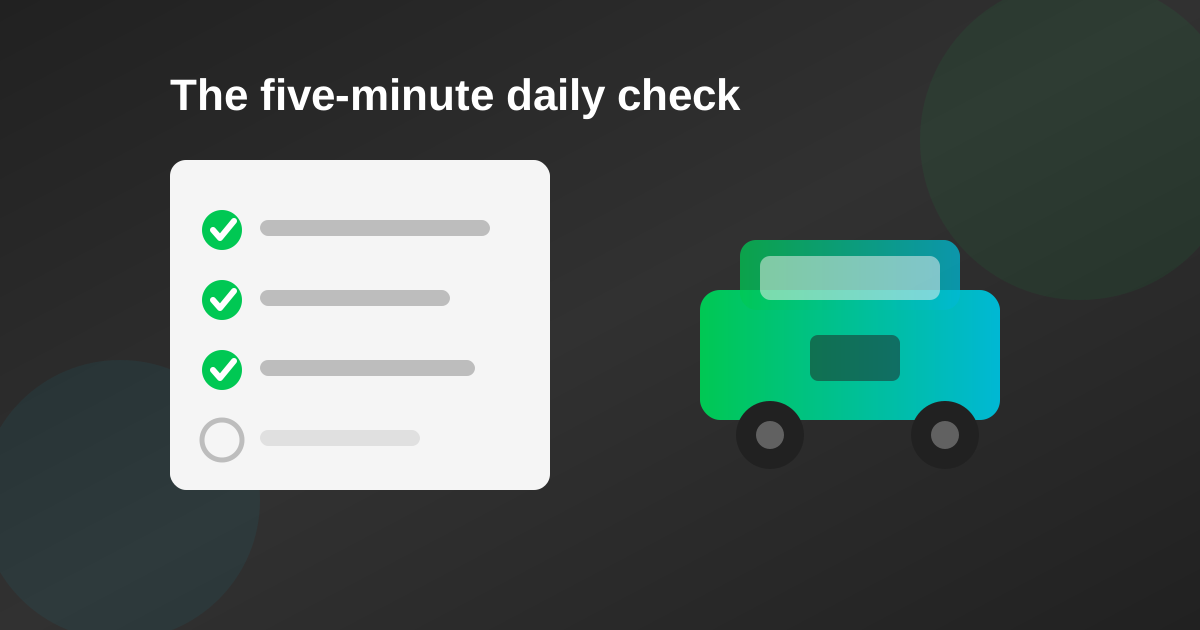
What follows is arranged as a routine rather than as advice: five minutes in the morning, a few habits during the shift, five minutes at night, and one slightly longer check every week.
Morning: five minutes before the first trip
- •Look at the pack casing. Any bulge, crack, dampness or change of shape means do not start the day — call service.
- •Check the connectors are seated and dry, with no green or white powder on the terminals.
- •Check tyre pressure, cold, at least twice a week. Under-inflation costs range every kilometre.
- •Confirm the charge level matches the route you have planned.
- •Give the brakes a roll test — if the vehicle drags, fix it before it eats your charge all day.
During the shift: four habits that cost nothing
- •Accelerate smoothly. Hard acceleration draws high current, which produces heat, which is exactly what shortens pack life. Getting to the same speed a second slower costs you nothing and saves charge.
- •Do not overload. Beyond the obvious safety issue, every extra kilo is drawn from the same battery. Overloading is the fastest way to turn a full charge into a short day.
- •Coast into stops. Reading traffic far enough ahead to lift off early, instead of driving up to the light and braking hard, is the single largest driver-controlled saving available.
- •Park in shade, always. During a lunch break, a wait at a stand, or an idle afternoon hour — shade is free and, in an Indian summer, it is worth more than most paid accessories.
Night: before you plug in
- •Let the pack cool for twenty to thirty minutes after a long run before connecting the charger.
- •Charge in a ventilated space, away from anything flammable, and never in the only exit from a room.
- •Use the charger supplied with the pack. Every time.
- •If you wash the vehicle, keep the hose away from the pack, connectors and charging port — an IP rating is protection, not immunity.
Weekly: ten minutes
- •Check that mounting bolts and clamps are tight — vibration loosens them, and a shifting pack chafes cables.
- •Wipe dust off the pack surface. A dust blanket traps heat.
- •Run a hand along accessible cabling for chafe points, hardening or heat damage.
- •Check the charging port and plug for burn marks or looseness.
- •Note the day’s range in a diary or on your phone. Trends are visible in writing and invisible in memory.
Monsoon: the extra month of care
Standing water is the season’s specific risk. Avoid driving through water deep enough to reach the pack or connectors, however tempting the shortcut. If you do get caught, park somewhere dry, let everything dry fully before charging, and check connectors for moisture before connecting.
If a pack has been submerged, do not charge it and do not assume it is fine because it still powers the vehicle. Get it inspected.
Four things never to do
- •Never let anyone open a lithium pack at a roadside shop. It is not a lead-acid battery and the failure modes are not comparable.
- •Never accept jugaad wiring, bypassed connectors or a BMS that has been disabled to make a fault go away.
- •Never mix chargers between packs of different make or rating.
- •Never transport a loose pack unsecured in the vehicle — impact damage is invisible until it is not.
Every three months
Book a professional inspection: state of health reading, cell voltage spread, connector and harness condition, and a check of the mounting. It is a short visit, it is much cheaper than an unplanned replacement, and it gives you documentation if you ever need to make a warranty claim.
Thinking about upgrading?
Talk to our team about the right pack for your vehicle, and about EMI options that keep the monthly outgo close to what you already spend.
Get in touch