The Four Numbers on a Magnet Datasheet, and Which One Actually Matters
Most magnet specifications are read for the wrong number. The one that tells you whether a motor survives a hot fault is usually the one nobody checks — and it degrades five times faster than the one everybody quotes.
Published: 27 August 2026
Buying guide · 8 min read
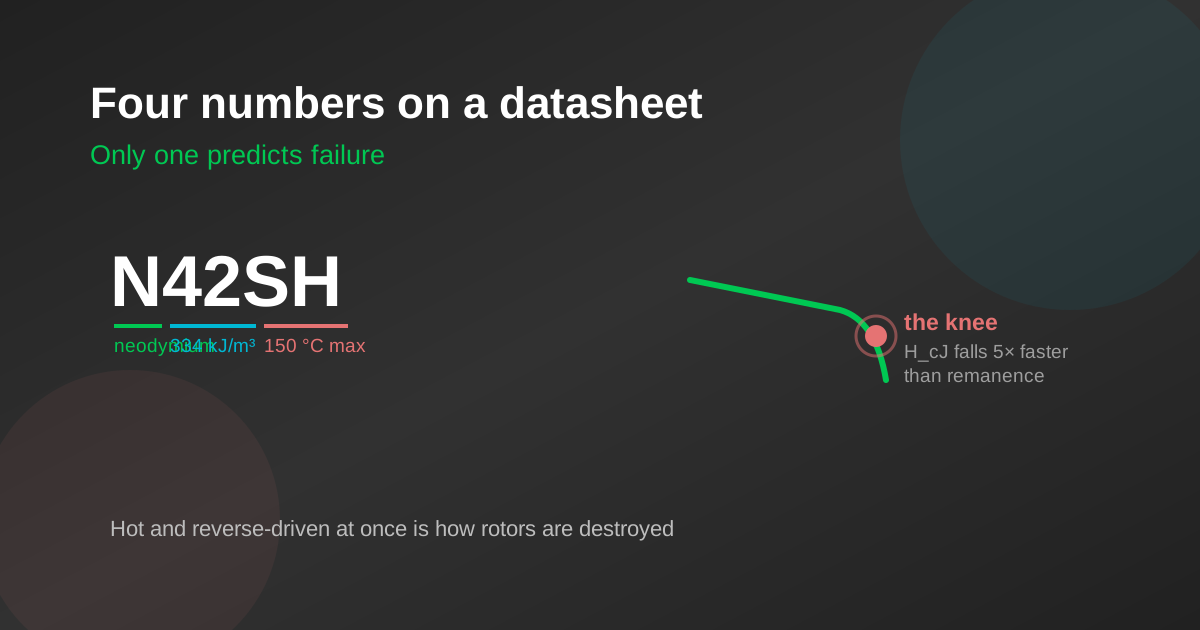
Four numbers, and most buyers read the wrong one
A permanent magnet datasheet has four numbers on it. Most buyers read the first one and the grade code, and neither is the number that predicts failure.
Here is what each one means and which one to argue about.
B_r — remanence
How strong the magnet is. Measured in tesla, typically 1.15 to 1.48 T for the neodymium grades used in traction motors.
This is the number that sets torque per amp and back-EMF per rpm. It is the one everybody quotes and the one that is easiest to understand. It is also not the number that will cause you a problem.
H_cB — coercivity
The reverse field needed to drive the magnet’s flux to zero. Frequently quoted, rarely useful. Skip to the next one.
H_cJ — intrinsic coercivity
This is the number that matters.
The difference between H_cB and H_cJ is the difference between cancelling a magnet’s flux and actually destroying its magnetisation. H_cJ is the field that genuinely damages the magnet, and it is always the larger of the two.
Why it matters: a magnet in a motor is under constant reverse field from its own geometry, plus whatever the stator throws at it. If that combined field pushes past a certain point — the knee of the demagnetisation curve — domains flip and do not flip back. The magnet is permanently weaker. Cooling it does not help. The only recovery is removing it and re-magnetising it in a saturating field, which for a bonded rotor means scrap.
(BH)max — maximum energy product
The best single figure of merit, in kJ/m³, because it captures strength and resistance to demagnetisation together. It is what the grade number encodes.
Reading a grade code
Take N42SH:
- •N — neodymium.
- •42 — (BH)max in MGOe. Multiply by 7.96 to get kJ/m³, so 42 becomes about 334 kJ/m³.
- •SH — maximum operating temperature, 150 °C.
The letter suffixes run: no letter = 80 °C, M = 100, H = 120, SH = 150, UH = 180, EH = 200, AH = 230.
The letters are not free. Each rung up the ladder is bought by substituting dysprosium or terbium for some of the neodymium. That raises coercivity and it lowers remanence, because heavy rare earths couple the wrong way against iron. You pay in magnet strength, and in the two scarcest elements in the supply chain, for the right to run hot.
The failure mode nobody designs for
Two numbers change with temperature, and they change at very different speeds.
- •Remanence falls at about −0.12 per cent per °C.
- •Intrinsic coercivity falls at about −0.6 per cent per °C.
Coercivity degrades five times faster than strength. So a magnet does not gradually fade toward failure. It performs to specification, and to specification, and to specification — and then at some temperature it crosses the knee under a load it survived yesterday, and loses a permanent chunk in a fraction of a second.
And it needs two conditions simultaneously:
- •A hot magnet at a benign operating point is fine.
- •A cold magnet hit with a large reverse field is fine.
- •A hot magnet hit with a large reverse field is how rotors are destroyed.
The design case is specific and foreseeable: a three-phase short circuit at high speed with the rotor already at maximum temperature. An inverter fault at the end of a long gradient.
What to ask a supplier
Two things, and a supplier who has neither has not done the work.
- •A hysteresigraph trace for your lot, at your maximum operating temperature. Not a datasheet curve at 20 °C — the 20 °C curve tells you almost nothing about the case that matters.
- •The demagnetisation analysis at the combined worst case: maximum temperature and maximum fault current together, not either alone.
One quirk worth knowing
If you are evaluating ferrite magnets instead of neodymium — and cost pressure plus rare earth supply risk is pushing some designs that way — the temperature coefficient of coercivity in ferrite is positive. Ferrite gets harder to demagnetise as it warms up.
Which means a ferrite-magnet motor is at its most vulnerable when cold. Every test plan written around neodymium has the temperature backwards for ferrite. A design validated through an Indian summer can fail on a Ladakh winter morning.
The full treatment — including an interactive demagnetisation curve you can drag the temperature on, and the four magnet families compared — is in Magnets and Motors.
Frequently asked questions
Which number on a magnet datasheet actually predicts failure?+
Intrinsic coercivity, H_cJ. Ordinary coercivity H_cB is the reverse field that drives the magnet’s flux to zero; H_cJ is the field that destroys the magnetisation itself, and it is always the larger of the two. A magnet in a motor sits under constant reverse field from its own geometry plus whatever the stator adds, and if that combined field pushes past the knee of the demagnetisation curve, domains flip and do not flip back.
What does a grade code like N42SH mean?+
N is neodymium. 42 is the maximum energy product in MGOe — multiply by 7.96 for kJ/m³, so 42 becomes about 334. SH is the maximum operating temperature, 150 °C. The suffix ladder runs: no letter 80 °C, M 100, H 120, SH 150, UH 180, EH 200, AH 230. Each rung is bought by substituting dysprosium or terbium for neodymium, which raises coercivity and lowers remanence.
Why do magnets fail suddenly rather than fading?+
Because the two temperature coefficients differ by a factor of five. Remanence falls at about −0.12 per cent per °C, intrinsic coercivity at about −0.6. So the magnet performs to specification until, at some temperature, it crosses the knee under a load it survived the day before and loses a permanent chunk in a fraction of a second. It also needs two conditions at once: a hot magnet at a benign operating point is fine, and a cold magnet under a large reverse field is fine.
What should you ask a magnet supplier for?+
Two things. A hysteresigraph trace for your lot at your maximum operating temperature — not a datasheet curve at 20 °C, which tells you almost nothing about the case that matters. And the demagnetisation analysis at the combined worst case of maximum temperature and maximum fault current together, not either alone. A supplier with neither has not done the work.
Do ferrite magnets behave the same way?+
No — the temperature coefficient of coercivity in ferrite is positive, so ferrite gets harder to demagnetise as it warms. A ferrite-magnet motor is therefore at its most vulnerable when cold, which inverts every intuition built on neodymium. A design validated through an Indian summer can fail on a Ladakh winter morning, and the demagnetisation test plan has to be written the other way round.
Thinking about upgrading?
Talk to our team about the right pack for your vehicle, and about EMI options that keep the monthly outgo close to what you already spend.
Get in touch