Battery Storage for Factories and Offices: Where the Savings Actually Come From
A commercial BESS earns its money from four separate mechanisms, and most sites only qualify for two or three. How to work out which apply to your electricity bill before you buy anything.
Published: 14 August 2026
C&I storage · 8 min read
Four mechanisms, not one
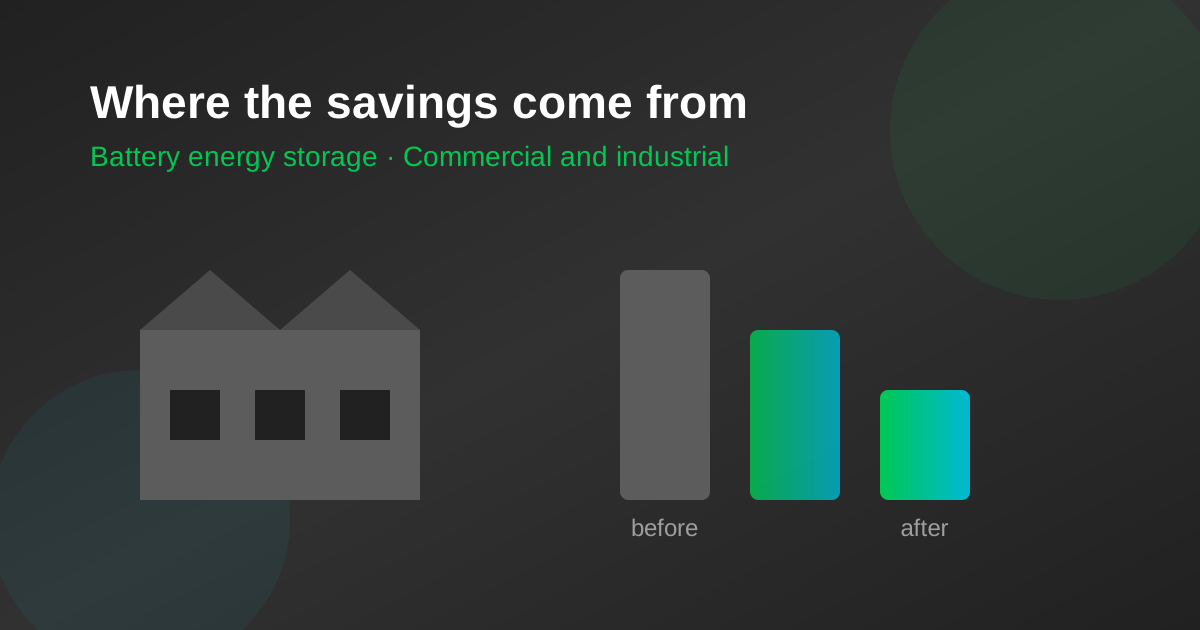
Commercial and industrial battery storage is often sold as a single idea — “cut your electricity bill”. In practice a C&I BESS earns money in four distinct ways, and a given site usually qualifies for only some of them.
- •Demand charge reduction. Most commercial tariffs in India bill you partly on your maximum demand, not just units consumed. A battery that covers short peaks lowers the demand you are billed for, every month.
- •Time-of-day arbitrage. Where your tariff varies by period, charge in the cheap window and discharge in the expensive one.
- •Solar self-consumption. Store rooftop generation that would otherwise be exported cheaply or curtailed, and use it after sunset.
- •Diesel displacement. Replace generator running during short outages and during the expensive part of the day.
Demand charges are usually the biggest prize
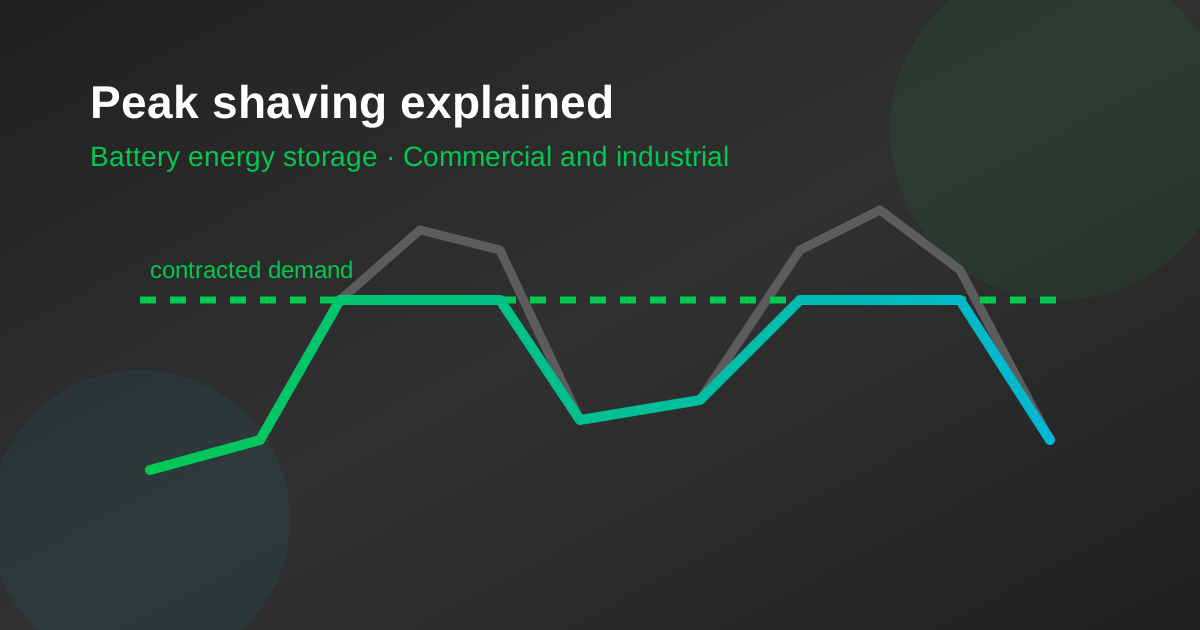
This is the mechanism most sites underestimate. If your bill includes a maximum demand component, you are paying every month for the highest short burst of load you drew — often caused by a few motors starting together for a handful of minutes.
A battery that covers those bursts lets you contract for a lower demand. The saving repeats monthly and does not depend on tariff reform or policy change, which makes it the most dependable part of most business cases.
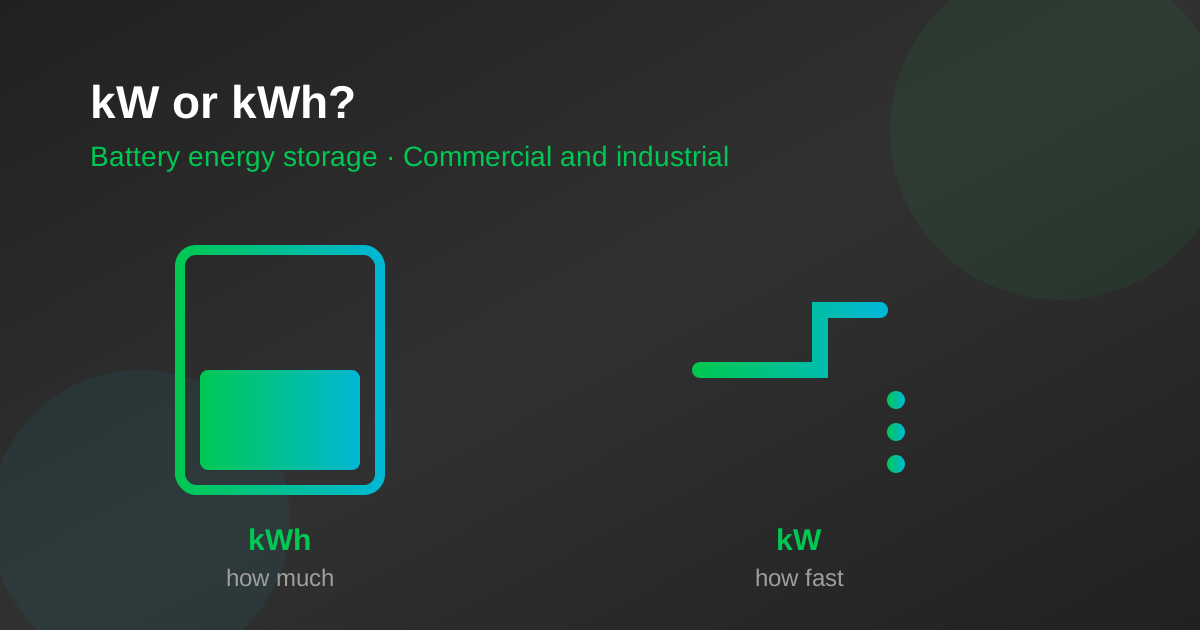
To size it, you need interval load data, not monthly bills. Fifteen-minute data for a year shows you how tall the peaks are, how long they last and how often they occur — which together determine both the kW and kWh you need.
Time-of-day arbitrage
Time-of-day tariffs are expanding for commercial and industrial consumers in India, and where they apply the spread between cheap and expensive periods can be meaningful.
The value depends on your own tariff schedule and how much load you can genuinely shift. Get the current schedule from your DISCOM and use those numbers rather than a generic assumption, because both the periods and the rates are revised over time.
Pairing with rooftop solar
Many industrial sites generate strongly at midday and consume into the evening shift. If export is capped, poorly compensated, or subject to curtailment, storing that surplus is straightforwardly valuable.
The key figure, as with homes, is the gap between what an exported unit earns and what an imported unit costs. The wider the gap, the stronger the case.
Diesel displacement
Diesel backup is expensive per unit, noisy, maintenance-heavy and increasingly constrained by local air quality rules. Batteries respond instantly, which also protects against the brief dips and interruptions that a generator cannot catch quickly enough.
See our diesel versus battery comparison for how the duration of your outages changes this answer.
How to evaluate a proposal
- •Ask which of the four mechanisms the savings come from, quantified separately
- •Ask what load data the sizing is based on — if the answer is monthly bills, the sizing is a guess
- •Check the assumed tariff against your actual current tariff schedule
- •Check whether the case depends on a policy or tariff staying unchanged for the whole payback period
- •Ask for the assumed cycle life and degradation, and whether the savings model accounts for capacity fading over time
- •Confirm who operates and maintains it, and what happens on failure
A proposal that separates the four mechanisms and states its assumptions is one you can check. One that presents a single savings number cannot be verified, and usually should not be trusted.
Frequently asked questions
How does a battery reduce a factory electricity bill?+
Through four mechanisms: shaving peak demand so you are billed for a lower maximum demand, shifting consumption from expensive to cheap tariff periods, storing on-site solar for use after sunset, and displacing diesel generator running. Which ones apply depends entirely on your tariff structure and load profile.
What data do I need before sizing a commercial BESS?+
At minimum, twelve months of electricity bills and interval load data from your meter, ideally at fifteen-minute resolution. Without the load profile you cannot see the peaks the battery would shave, and any sizing is guesswork.
Can a battery replace a diesel generator for a factory?+
It can replace short-duration backup and is far better for power quality events, but a battery sized for many hours of full-load backup gets expensive quickly. Many sites run both — battery for the frequent short interruptions and peak management, generator for rare long outages.
Thinking about upgrading?
Talk to our team about the right pack for your vehicle, and about EMI options that keep the monthly outgo close to what you already spend.
Get in touch