Peak Shaving and Demand Charges: How a BESS Cuts a Commercial Electricity Bill
Maximum demand charges are billed on your worst fifteen minutes of the month. Understanding that one line on your bill is usually where commercial storage pays for itself.
Published: 14 August 2026
C&I storage · 7 min read
The line on your bill most people ignore
A commercial electricity bill has two broad parts: what you consumed, and what capacity you required. The second part — demand charges, sometimes billed against contracted demand, sometimes against recorded maximum demand — is not about total consumption at all.
It is about your worst interval. A few motors starting together at 9:15 on one morning can set the demand figure you are billed on for the entire month, even though the event lasted minutes.
What peak shaving does
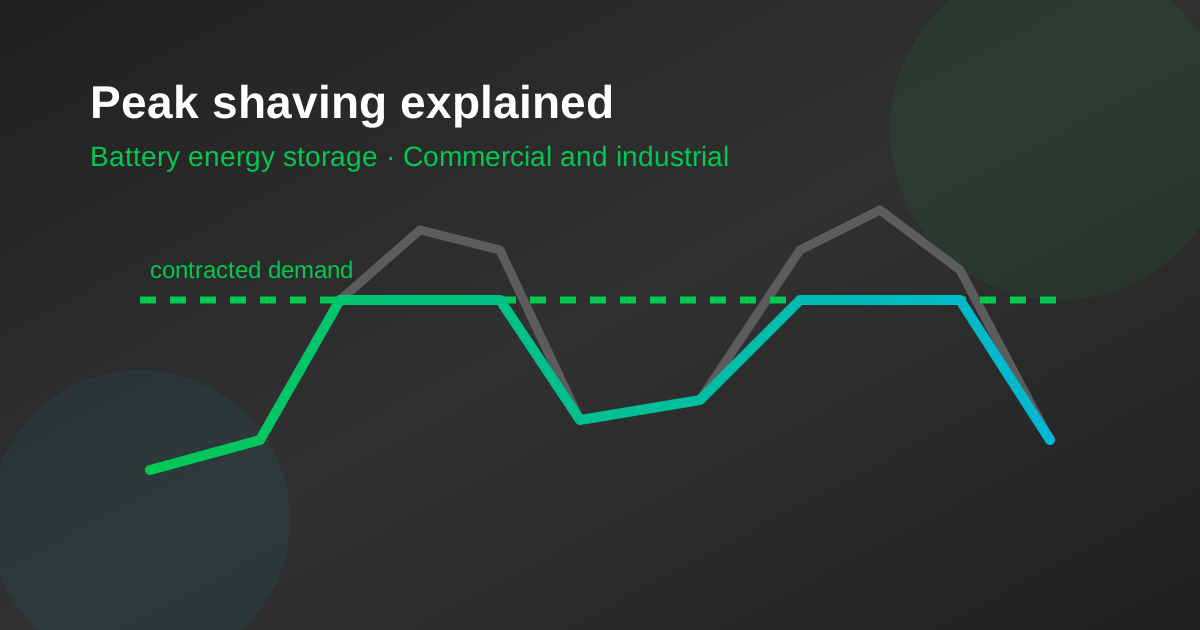
A battery configured for peak shaving watches your incoming load and discharges whenever demand approaches a ceiling you have set. The grid never sees the spike; the battery covers it. Between events, the battery recharges from the grid during low-demand periods or from on-site solar.
Done well, this lets you reduce your contracted demand, and the saving repeats every month regardless of tariff reform, policy change or weather.
Why interval data is non-negotiable
You cannot size a peak-shaving system from monthly bills. A bill tells you the peak happened; it does not tell you how tall it was, how long it lasted, or how often it recurred. Those three facts determine the kW and kWh you need.
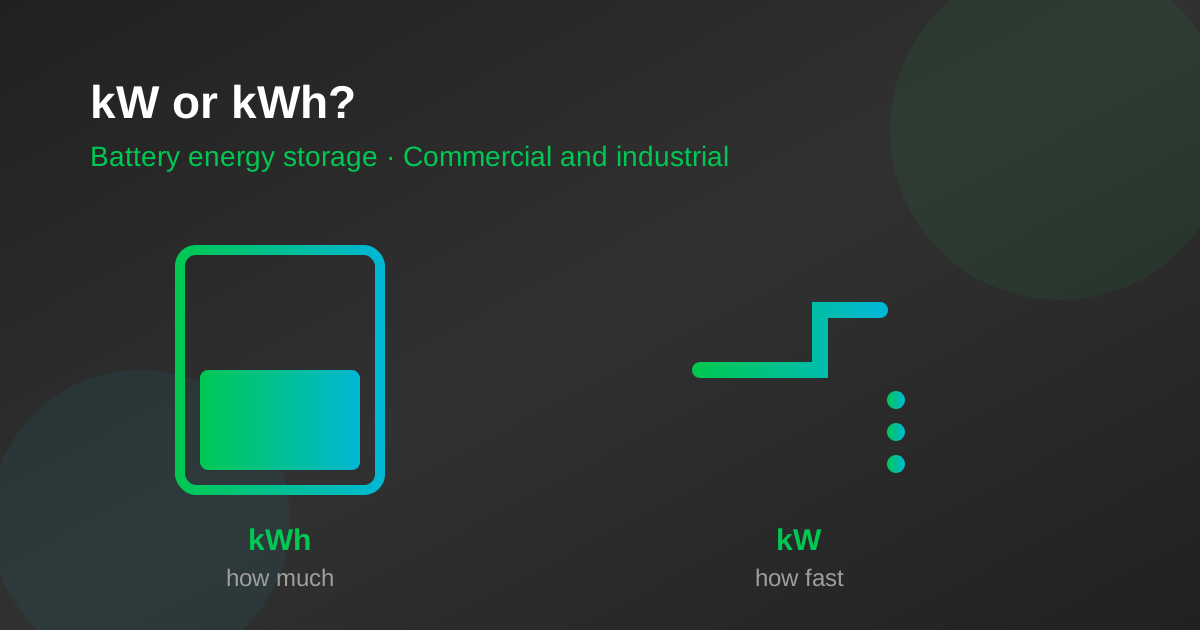
- •Height of the peak above your target ceiling determines the power rating (kW) the battery must supply.
- •Duration of the peak determines the energy (kWh) needed to ride through it.
- •Frequency of peaks determines whether the battery has time to recharge between events, and how many cycles a year it will accumulate.
Ask your DISCOM or your meter provider for fifteen-minute interval data for at least twelve months. Any proposal built without it is guessing.
Choosing the ceiling
Setting the target demand too low means the battery runs out mid-peak and the spike gets through anyway, which wastes the whole exercise. Setting it too high leaves savings on the table.
The right ceiling comes out of the load data: low enough to capture most of the value, high enough that the battery can reliably cover every peak that crosses it, including on the worst day in the dataset rather than a typical one.
Stacking peak shaving with other value
The same battery can usually do more than one job, as long as the control system knows how to prioritise. Common stacking:
- •Peak shaving as the primary duty, since it is the most dependable saving
- •Time-of-day arbitrage in the hours when no peak is expected
- •Storing rooftop solar surplus rather than exporting it cheaply
- •Backup for short interruptions, with reserve state of charge held back for that purpose
Note the tension: energy held in reserve for backup is energy unavailable for shaving. Any serious proposal states how that reserve is set and what it costs in foregone savings.
Before you commit
- •Get your current tariff schedule and confirm the demand charge rate and measurement interval
- •Confirm the penalty structure for exceeding contracted demand
- •Confirm whether reducing contracted demand is straightforward with your DISCOM and how long it takes
- •Check the proposal accounts for capacity fading over the battery life
- •Confirm who is responsible if the system fails to shave a peak and you get billed anyway
Frequently asked questions
What is peak shaving?+
Peak shaving means using stored energy to cover short bursts of high load so that the demand drawn from the grid never rises above a chosen ceiling. Because commercial tariffs bill partly on maximum demand, holding that ceiling down reduces the bill every month.
How are demand charges calculated in India?+
Most commercial and industrial tariffs bill a fixed or demand component based on your contracted or recorded maximum demand, typically measured over short intervals such as fifteen or thirty minutes. Exact definitions, penalties for exceeding contracted demand, and rates vary by state and consumer category, so check your own tariff schedule.
How much can peak shaving save?+
It depends entirely on the demand charge rate in your tariff and how spiky your load profile is. A site with occasional short, tall peaks can save a great deal; a site with a flat load profile has little to shave. Interval load data is the only way to tell.
Thinking about upgrading?
Talk to our team about the right pack for your vehicle, and about EMI options that keep the monthly outgo close to what you already spend.
Get in touch